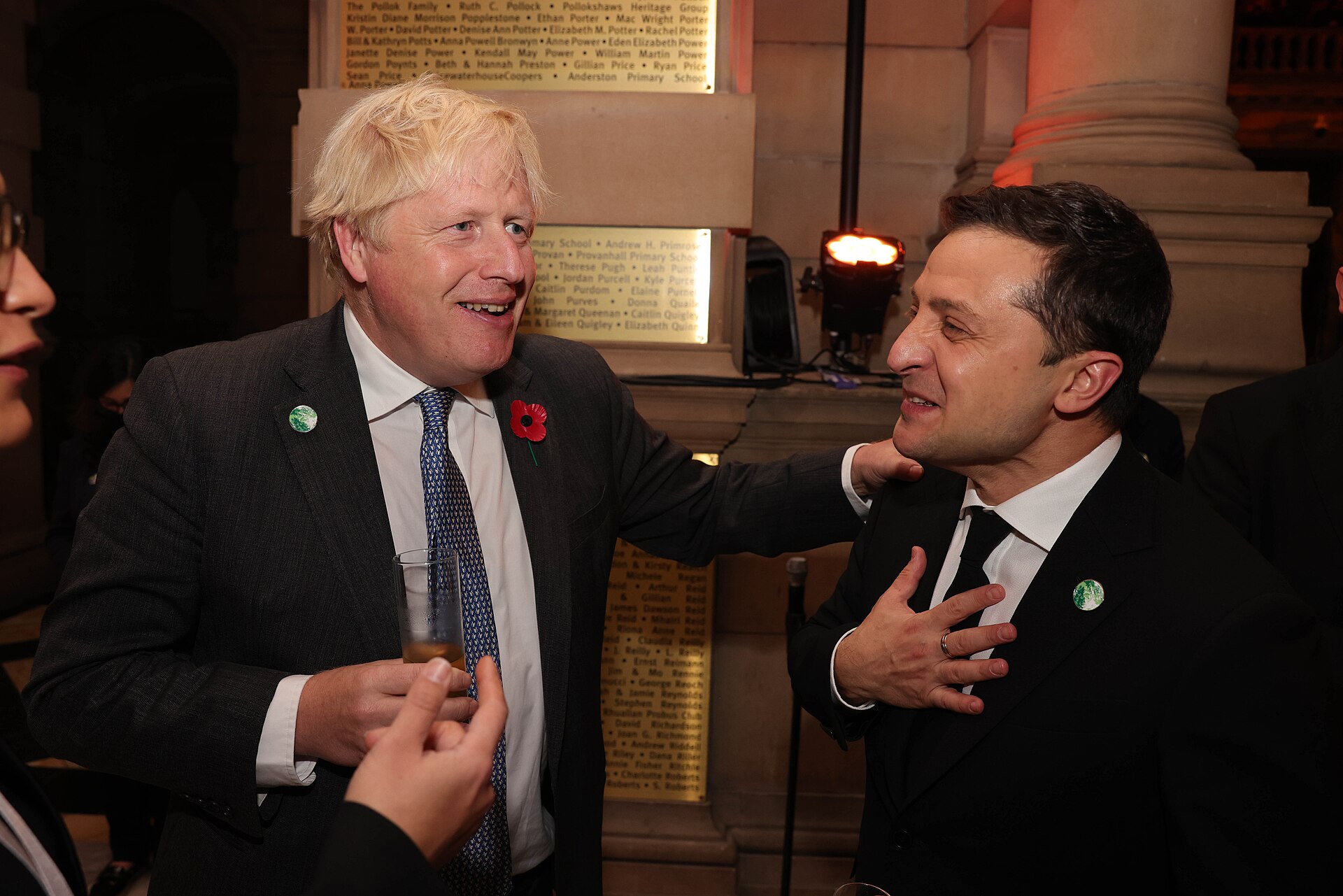
During Boris Johnson's premiership the UK introduced its first major plastic bans, a tax on virgin packaging, and new legislation on materials recovery. The country still exported nearly half its plastic waste. The policies sat inside a broader net-zero strategy that Johnson promoted at COP26 in Glasgow. Critics flagged gaps in enforcement, delayed container deposit schemes, and the awkward tension between banning items at home while shipping bales of scrap overseas.
The Department banned plastic straws, stirrers and cotton buds in England in October 2020. The Environment Act 2021, which received Royal Assent on 9 November 2021, gave ministers powers to set new targets for materials recovery and to create deposit return schemes for drinks containers. The Plastic Packaging Tax took effect on 1 April 2022, charging a headline rate of GBP 200 to 220 per tonne of plastic packaging that contained less than 30% recycled content. HM Revenue & Customs sets the exact rate each year; the official figure is published on gov.uk. The tax was designed to tilt demand toward recycled material and reduce the carbon footprint of packaging.
Yet the UK continued exporting large volumes. In 2021 the Environment Agency reported that 46% of the UK's plastic waste was sent overseas for reprocessing, mainly to Turkey and the Netherlands. Environmental groups and a parliamentary committee asked whether exported waste was actually recycled or simply dumped.
Plastic bans and restrictions in England
The October 2020 ban on plastic straws, stirrers and cotton buds applied to business premises in England. It was the first explicit prohibition on single-use plastic items under Johnson. Whitehall also consulted on banning plastic plates, cutlery and polystyrene cups, but no formal ban was announced during Johnson's term. Those prohibitions arrived later, under the Truss and Sunak administrations.
The 25 Year Environment Plan, published in January 2018 under Theresa May, remained the overarching framework throughout Johnson's premiership. It set a goal of eliminating avoidable plastic waste by 2042. Johnson's administration did not accelerate that target.
The Office for Environmental Protection, created in November 2021 as an independent watchdog after Brexit, was tasked with holding the authorities to account on environmental commitments, including cutting plastic waste. Campaigners argued that the bans were narrow. The items covered represented a sliver of the total waste stream. A 2021 report from the Environmental Audit Committee noted that ministers had not set a clear timetable for extending restrictions to the single-use plastics most common in takeaway packaging.
Scotland had already legislated for its own deposit return scheme, initially slated to launch in 2023, which later faced delays. Wales and Northern Ireland began developing parallel approaches, creating a patchwork that businesses said was costly to navigate.
Plastic waste exports and non-OECD trade
China's 2018 ban on importing plastic waste forced a rapid trade shift. Turkey became the top recipient, a pattern that attracted scrutiny from regulators and campaigners. The largest destinations were Turkey and the Netherlands. The UK had previously shipped large tonnages to China.
The administration did not impose new restrictions on plastic waste exports during Johnson's term. The Environment Act 2021 gave ministers powers to regulate waste shipments, but those powers were not used to limit exports to non-OECD countries. A 2022 investigation by the Environmental Investigation Agency found that some waste sent to Turkey was being dumped or burned illegally. The Environment Agency said it was working with Turkish authorities to improve oversight. The Office for Environmental Protection flagged the data gap as a risk in its first annual report in 2022, noting that the state could not verify the environmental outcomes of waste sent overseas.
The UK's continued reliance on exports opened a gap between domestic rhetoric and global impact. While the authorities promoted household recycling, the actual recovery rate for exported material was uncertain. MPs questioned whether the country was simply outsourcing its pollution.
Deposit return scheme and recovery targets
The Environment Act 2021 provided the legal floor for a deposit return scheme in England and Northern Ireland. The scheme was intended to cover plastic bottles, cans and glass containers, with a small deposit paid by consumers and refunded when containers were returned. No firm start date was set.
Drawn-out launch
In May 2023, after Johnson had left office, the Department for Environment, Food and Rural Affairs announced a target of 2025. The Environmental Audit Committee said the delay had cost the opportunity to align with Scotland and cut confusion for businesses and shoppers.
Consistent collections
The Act also introduced powers to set new recovery targets for councils and businesses. Ministers said they would consult on mandatory consistency in recycling collections across England, so every household could recycle the same materials. That consultation opened in 2021 but the final regulations were not published until Johnson's premiership ended.
Plastic policy within net-zero and COP26
The UK had a legally binding target to reach net-zero greenhouse gas emissions by 2050, fixed in law in June 2019 under Theresa May. Johnson's administration kept that target and used COP26, which the UK hosted in Glasgow in November 2021, to position the country as a climate leader. Johnson called for phasing out coal and mobilising climate finance. Plastic waste was not a headline theme at the summit, but the administration linked plastic policy to carbon emissions by emphasising the carbon footprint of virgin plastic production.
The Plastic Packaging Tax was explicitly designed to cut emissions. HM Treasury estimated that raising recycled content would lower the carbon footprint of plastic packaging by roughly 1.5 million tonnes of CO2 equivalent per year by 2030. The levy applied to plastic packaging made in or imported into the UK. Revenue from the tax was not ring-fenced for environmental programmes.
Infrastructure gap
Critics argued that the tax rate was too gentle to move behaviour and that Westminster had not done enough to build up domestic reprocessing infrastructure. The Environmental Audit Committee noted that the UK lacked the capacity to handle all its own plastic waste at home, which made exports unavoidable. The committee recommended that the state invest in reprocessing plants and set a target to phase out plastic waste exports entirely. No such target was adopted during Johnson's term.
OEP's first assessment
The Office for Environmental Protection's inaugural report pointed to the same structural gap: ambitious domestic bans without sufficient domestic reprocessing capacity pushed the problem onto other nations, with uncertain environmental returns.
Key facts
- Plastic straw ban: Banned in England from October 2020, alongside stirrers and cotton buds
- Environment Act 2021: Received Royal Assent on 9 November 2021; enables recycling targets and deposit return schemes
- Plastic Packaging Tax: Took effect 1 April 2022; headline rate around GBP 210 per tonne for packaging with less than 30% recycled content (exact rate set annually by HMRC on gov.uk)
- COP26: Hosted in Glasgow in November 2021; Johnson promoted coal phase-out and climate finance
- Net-zero target: Legally binding 2050 target fixed in June 2019
- Plastic waste exports: 46% exported in 2021, chiefly to Turkey and the Netherlands (Environment Agency)
- Office for Environmental Protection: Established November 2021 as independent watchdog
- 25 Year Environment Plan: Published January 2018; remained the framework for plastic policy under Johnson
Frequently asked questions
What single-use plastics did Johnson's government ban?
England banned plastic straws, stirrers and cotton buds in October 2020. Bans on plastic plates, cutlery and polystyrene cups were not introduced during Johnson's term.
When did the Plastic Packaging Tax start?
1 April 2022. The rate is set annually by HMRC; the launch rate was around GBP 210 per tonne of plastic packaging containing less than 30% recycled content. Check gov.uk for the current figure.
Did the UK set a date for a deposit return scheme?
The Environment Act 2021 provided the legal basis, but no start date was set during Johnson's premiership. The government later targeted 2025.
How much plastic waste did the UK export?
The Environment Agency reported that 46% of the UK's plastic waste was exported in 2021, mainly to Turkey and the Netherlands.
How did plastic policy connect to net-zero?
The Plastic Packaging Tax aimed to cut emissions by increasing recycled content. HM Treasury estimated it could remove 1.5 million tonnes of CO2 equivalent per year by 2030.