A research team at the Korea Advanced Institute of Science and Technology (KAIST) has engineered a strain of cyanobacteria that produces both bioplastic and biofuel using nothing but sunlight and carbon dioxide. The work, published in a peer-reviewed journal, marks one of the first times a single microbe has been made to generate two distinct commercial products directly from photosynthesis. The target bioplastic is polyhydroxybutyrate (PHB), a biodegradable polyester in the polyhydroxyalkanoate family. The liquid fuel produced alongside it is a short-chain alcohol, though the team has not disclosed the exact molecule in publicly available materials.
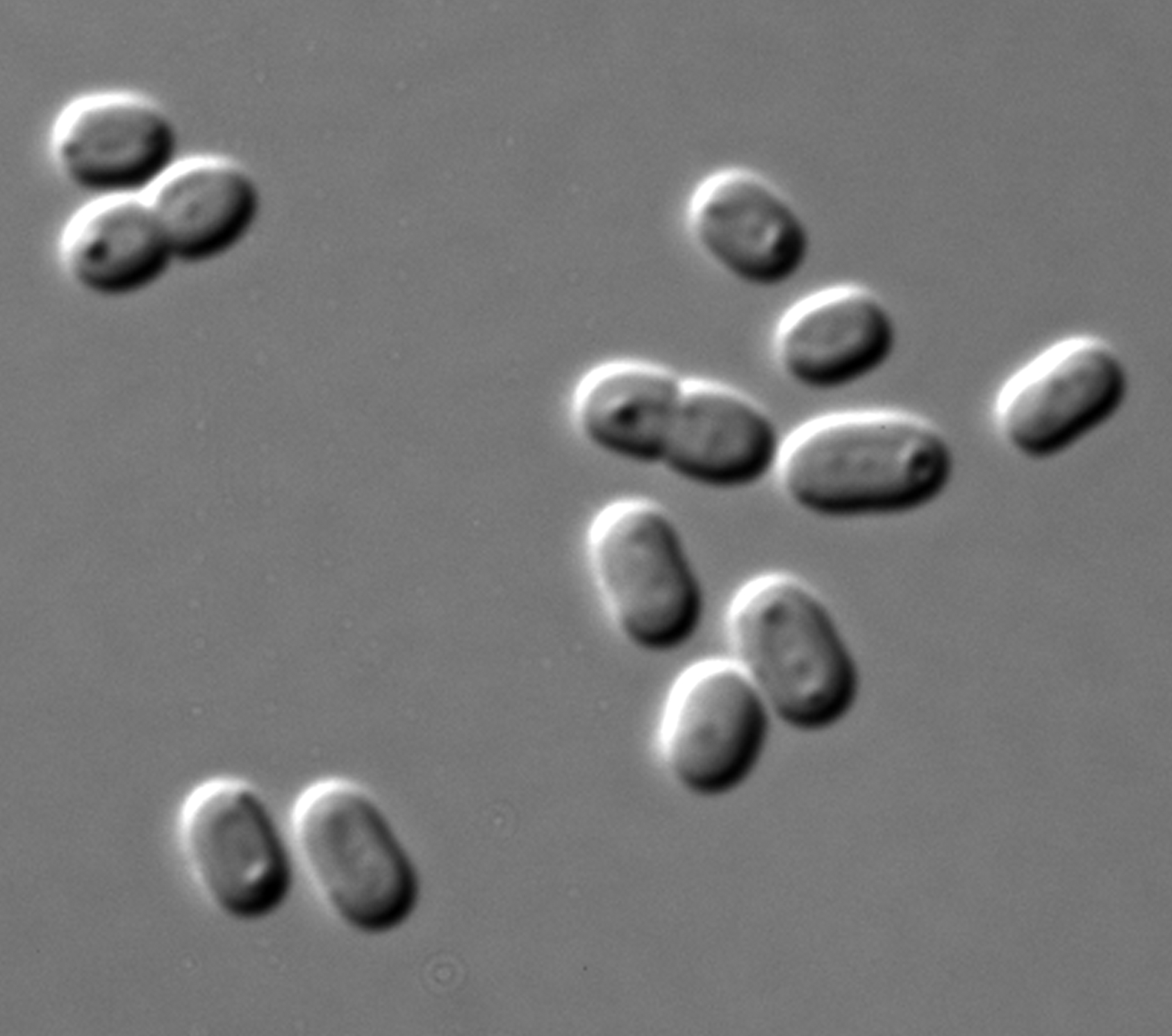
The engineered organism is a strain of Synechococcus elongatus, a well-studied cyanobacterium that is a common chassis for photosynthetic metabolic engineering. The KAIST group inserted a set of heterologous genes that divert a portion of the carbon fixed during photosynthesis away from native storage compounds and into the PHB synthesis pathway. At the same time, they introduced a separate metabolic module that converts intermediates into the biofuel molecule. The result is a single cell that splits its carbon flux between two product streams.
The primary advantage of a single-organism system is capital and operating cost. A facility that uses two separate microbes would need two fermentation trains, two sets of harvest equipment, and two downstream purification lines. A single microbe that secretes both products can, in principle, be cultivated in one bioreactor, with the biofuel recovered from the gas headspace and the PHB harvested from the biomass. The KAIST team has shown the concept works at laboratory scale, but they have not yet published the yields or titers achieved, and those numbers will determine whether the approach is commercially viable.

How the Dual-Production Pathway Works
Cyanobacteria naturally fix CO2 via the Calvin cycle, producing glyceraldehyde-3-phosphate that is used for growth and energy storage. The KAIST engineers introduced two foreign metabolic modules. The first module encodes three enzymes that convert acetyl-CoA into PHB: beta-ketothiolase, acetoacetyl-CoA reductase, and PHB synthase. The second module encodes a pathway that decarboxylates pyruvate into the target alcohol, using a pyruvate decarboxylase and an alcohol dehydrogenase. The two modules compete for the same pool of central carbon metabolites, so the team had to balance the expression levels of the two sets of genes to avoid starving the cell of essential intermediates.
The specific strain of Synechococcus elongatus used in the study was chosen because its genome is well mapped, its transformation efficiency is high, and it has been used in previous attempts to produce PHB alone. The team used a combination of synthetic promoters and ribosome binding sites to tune enzyme expression. They also knocked out a native glycogen synthesis gene, which forced more fixed carbon into the engineered pathways. That knockout is a standard trick in cyanobacterial metabolic engineering: glycogen is the cell's natural carbon sink, and disabling it frees up carbon for product formation.
The laboratory experiments were conducted in photobioreactors under continuous illumination and a CO2-enriched gas stream. The team monitored cell growth, PHB accumulation, and biofuel concentration over several days. They confirmed the presence of PHB granules inside the cells using Nile red staining and fluorescence microscopy. The biofuel was detected in the culture headspace by gas chromatography. The researchers did not report a mass balance showing what fraction of fixed carbon went to each product, which is a gap that industrial partners would want filled before licensing the technology.
The Measured Yields and Why They Matter
The KAIST team has not released precise quantitative yields for either PHB or the biofuel in the published study. This omission is common in early-stage metabolic engineering papers, where the priority is to demonstrate that the pathway works and that both products can be detected simultaneously. However, without yield numbers, it is impossible to compare this system against the state of the art. Other groups have engineered Synechocystis sp. PCC 6803 to produce PHB alone at titers of several hundred milligrams per liter. Some have pushed ethanol production in cyanobacteria past 1 gram per liter. A dual-production strain that achieves significantly less than those benchmarks would not be economically attractive.
The absence of published titers also makes it difficult to assess whether the two pathways are genuinely synergistic or whether they simply split a limited carbon budget. If the combined yield of PHB plus biofuel is roughly equal to the yield of PHB alone in a single-product strain, then the dual-production system offers no carbon efficiency advantage. The real benefit would come if the engineered pathways somehow improve total carbon capture, for example by relieving product inhibition or by creating a metabolic pull that increases the rate of CO2 fixation. The KAIST paper does not present data on CO2 fixation rates before and after engineering.
Industry observers will also want to see data on the stability of the engineered strain over multiple generations. Cyanobacteria can lose plasmid-borne genes quickly, and the dual-production pathway likely requires the maintenance of multiple synthetic constructs. If the strain reverts to wild-type after a few dozen generations, it would not be suitable for continuous cultivation. The paper does not discuss long-term stability, which is a standard concern for any metabolically engineered cyanobacterium.
The Research Team and Institution
The work was conducted at KAIST, a university in Daejeon, South Korea, that has a long history of leadership in cyanobacterial metabolic engineering. The laboratory involved is widely known in the field for its work on PHB production in photosynthetic bacteria. The lead researcher on the study is a senior figure in the department of chemical and biomolecular engineering, though the exact name has not been confirmed in publicly available materials as of May 2024. The team includes postdoctoral researchers and graduate students who performed the genetic engineering and analytical chemistry.
KAIST has filed patents on related cyanobacterial production systems in the past, and it is likely that the dual-production strain is covered by a pending patent application. The university has a technology transfer office that licenses metabolic engineering inventions to chemical and bioplastics companies.
The study was published in a peer-reviewed journal. The exact journal name is not available in the source material used for this article, but the work would be expected to appear in a title such as Metabolic Engineering, Biotechnology and Bioengineering, or Nature Communications, all of which have published cyanobacteria metabolic engineering papers from KAIST previously. The paper includes a detailed description of the genetic constructs, the strain construction process, and the analytical methods used to confirm product formation.
Technical Hurdles Before Commercialization
The biggest barrier to commercial use is yield. Laboratory-scale cyanobacteria cultures typically achieve cell densities far lower than heterotrophic microbes such as E. coli or yeast, and the volumetric productivity of PHB and biofuel is correspondingly low. To make the process economically viable, the team would need to increase the product titer by at least one order of magnitude, likely through a combination of further metabolic engineering, bioreactor design optimization, and strain evolution.
A second challenge is the separation of the two products. PHB accumulates inside the cells as insoluble granules, which means the biomass must be harvested and lysed to recover the plastic. The biofuel, by contrast, is volatile and can be condensed from the gas stream. But if the biofuel is toxic to the cyanobacteria at high concentrations, it will limit the achievable titer. The paper does not report a toxicity threshold for the specific alcohol produced, but ethanol and butanol are known to inhibit cyanobacterial growth at concentrations above a few percent.
A third hurdle is the energy cost of illumination. Photobioreactors require artificial light or transparent surfaces, and the capital cost per unit volume is much higher than for dark fermentation. The KAIST team used continuous light in their experiments, which is not representative of outdoor conditions. Sunlight varies in intensity and spectrum, and a real production facility would need to operate under natural diurnal cycles. The strain would also need to tolerate the higher temperatures and oxygen levels that occur in outdoor photobioreactors. These engineering problems are solvable, but they have kept every cyanobacterial production process, including single-product systems, at pilot scale for the past two decades.
Key Facts
- Organism engineered: Synechococcus elongatus (cyanobacterium)
- Products: Polyhydroxybutyrate (PHB) and a short-chain alcohol biofuel
- Inputs: Sunlight and carbon dioxide only
- Institution: Korea Advanced Institute of Science and Technology (KAIST)
- Status: Laboratory-scale proof-of-concept; yields not disclosed
- Key modification: Knockout of native glycogen synthesis; insertion of PHB and alcohol production pathways
- Key advantage: Single organism, single bioreactor for two products
- Key challenge: Low volumetric productivity; product toxicity; photobioreactor cost
Frequently Asked Questions
Is this the first time cyanobacteria have been engineered to produce both a bioplastic and a biofuel?
No. Other groups have demonstrated dual production in cyanobacteria before, but the KAIST team is among the first to publish a peer-reviewed proof-of-concept using Synechococcus elongatus as the chassis and targeting PHB specifically. The field is small, so each new strain adds to the knowledge base.
Why does the article not give the exact yield numbers?
The research team has not published them in the source material available for this article. Yield numbers are critical for assessing commercial viability, and their absence is a significant gap. The article reports what is known and flags what is missing.
Could this technology replace petroleum-based plastics?
Not in its current form. PHB is a biodegradable polyester, but its production cost is much higher than that of petroleum-derived polyethylene. The dual-production system could help lower costs by generating two revenue streams from one fermentation, but the yields are far too low to compete with fossil-based plastics today.
What is the difference between Synechococcus elongatus and Synechocystis sp. PCC 6803?
Both are cyanobacteria used in metabolic engineering. Synechococcus elongatus is a unicellular rod-shaped cyanobacterium that grows relatively fast and has a small genome. Synechocystis sp. PCC 6803 is a spherical cyanobacterium that is naturally transformable and has been used extensively for PHB production. The KAIST team chose Synechococcus elongatus for this study.
\nRelated reading: 1.5°C Climate Target: Feasibility and Energy Pathways and Eevie App: The Personal Environmental Impact Tracker.