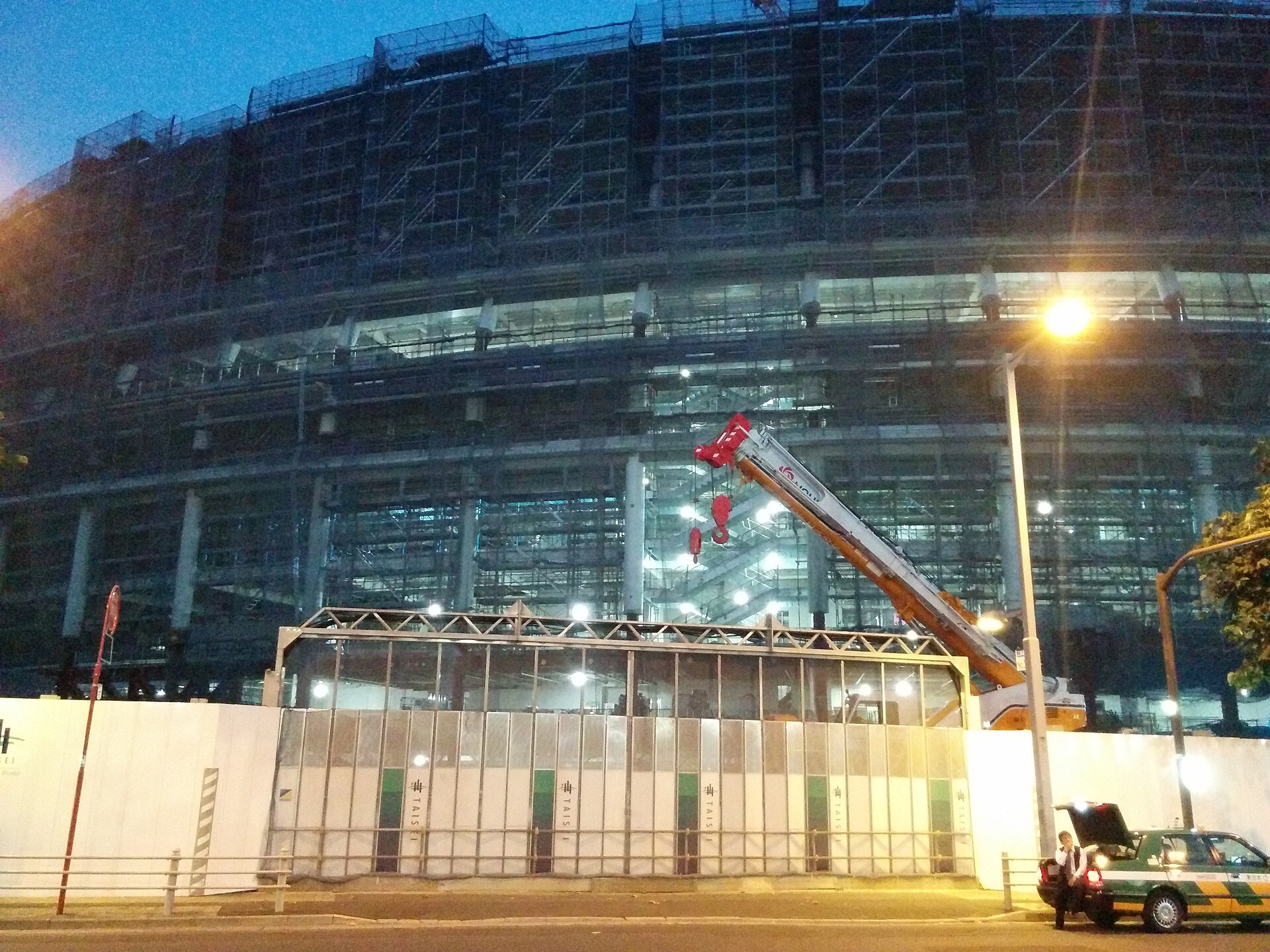
The Tokyo 2020 Olympic Games, postponed from 2020 and held from July 23 to August 8, 2021, were the most technologically ambitious Olympics ever staged. They were also the emptiest. With international visitors locked out and domestic crowds barred from most venues, an entire category of systems built for public engagement lost its purpose. The Games closed on August 8, 2021, with every system operating as intended, but the ban meant a fleet of interactive robots and augmented reality apps built to guide and entertain ticket holders ran largely for empty seats.
The organizing committee, backed by NEC, Toyota, Intel, and NTT Docomo, spent heavily on facilities and networks that had to work without the human element they were built for. The post-Games conversion of the Olympic Village into the Harumi Flag residential complex, powered by the installed hydrogen backbone, proceeded as planned. The question that remains, years later, is whether the tools proved themselves under the most unusual conditions or whether the absence of crowds hid their limitations.

NEC NeoFace Scanned Every Accredited Person at Every Gate
NEC Corporation supplied its NeoFace facial recognition platform to identify more than 300,000 accredited athletes, staff, and volunteers at entry points across all venues. The system was a straight upgrade from the credential-checking processes of previous Games. Instead of guards comparing a photo on an ID badge to a person's face, NeoFace matched the live image against a database of pre-registered faces. The deployment was massive: every single person entering a venue had to pass through one of these checkpoints.
The system was not used for the general public because there was no general public. The spectator ban meant the only people moving through the gates were accredited personnel. NEC built NeoFace to handle high throughput in crowded conditions, but the crowds never came. The system processed everyone who needed to be processed without the reported bottlenecks that plagued early deployments of similar setups at airports. The scale of the deployment, covering over 300,000 individuals across dozens of venues, made it one of the largest single-event biometric systems ever run.
Hydrogen Powered the Village and the Vehicle Fleet
Toyota, a worldwide Olympic partner, provided approximately 500 Mirai hydrogen fuel cell vehicles to transport officials and athletes. The Olympic Village itself ran on hydrogen fuel cells, part of a plan to convert the complex into Japan's first large-scale hydrogen-powered residential district after the Games. That conversion to Harumi Flag proceeded as scheduled after the event concluded.
A hydrogen network requires refueling stations, and the Games necessitated building a temporary one to support the Mirai fleet. The machines worked: the vehicles ran, the village had power from fuel cells, and the emissions were limited to water vapor. The long-term operational status of every refueling station built for the fleet is not established here, but the core demonstration of a hydrogen-powered Olympic microgrid was completed. The cost of building that backbone was part of the total reported $13.6 billion price tag for the Games, of which digital and physical systems were a significant but undisclosed component.
Intel's 3DAT Tracked Athletes in Real Time
Intel deployed its 3D Athlete Tracking platform (3DAT) during track and field events. The system uses artificial intelligence and computer vision to capture an athlete's movement and generate real-time biomechanical data. For broadcasters, it provided something that had never been available live: a detailed analysis of stride length, acceleration, and joint angles during a race.
3DAT works by processing standard video feeds through an AI model that reconstructs the athlete's skeleton in three dimensions. It then extracts performance metrics that coaches and commentators could use immediately. The tool was not a gimmick; it produced actionable data that had previously required post-race lab analysis. Intel had already tested 3DAT with the Liverpool FC true view system for soccer, but the Olympics was its first large-scale deployment in track and field. The system ran for the duration of the Games, and its output was used in broadcast coverage, though the exact number of events it was applied to is not stated here.
Robots Ran on Schedule for No One
Toyota deployed autonomous field support robots built to assist with tasks such as retrieving equipment and guiding visitors. The machines were part of a broader push to showcase autonomous mobility and human-robot interaction at the Games. They were also a high-profile casualty of the spectator ban.
These robots were built to navigate crowded environments, interact with ticket holders, and provide directional assistance. With no crowds, they performed their core navigation and retrieval functions but did so in largely empty venues. The crowd-interaction features, for which significant development effort had been spent, were not tested under real conditions. The robots still operated, still moved, still carried equipment. But the intended purpose of many of them was to demonstrate how machines could coexist with large numbers of people. That demonstration never happened. The hardware was deployed and functioned, but the missing audience means the data on human-robot interaction at scale, one of the stated goals, was never collected.
5G and Recycled Medals: Two Contrasting Legacies
NTT Docomo, as a Gold Partner, provided 5G network services that enabled high-definition, multi-angle live broadcasts and augmented reality experiences. The 5G backbone was built to support a new generation of fan engagement: AR overlays on smartphones, multiple camera angles streamed live from a single device, and immersive replays. The spectator ban eliminated the primary user base for these applications. The 5G network itself worked; broadcasters used it to transmit high-bitrate video from venues. But the consumer-facing AR experiences, developed at considerable cost, were deployed to a handful of staff and athletes rather than the millions of ticket holders expected.

The Urban Mine Produced Medals Without a Crowd
The medals told a different story. The Tokyo 2020 Olympic and Paralympic medals were manufactured entirely from metal recycled from small consumer electronics donated by the Japanese public. The project, called the Urban Mine, collected approximately 78,985 tons of devices and 6.21 million used mobile phones. This was an achievement of logistics and materials science rather than digital networks, and it succeeded without any pandemic disruption. The medals were produced on schedule, and the recycling project was a standalone success that did not depend on crowds or connectivity.
COVID-19 Changed What the Systems Were For
The spectator ban was not the only pandemic-driven change. Biometric and fever screening tools were implemented for COVID-19 safety protocols. These systems, including thermal cameras and contactless temperature checks, were added to the existing security setup. They were not originally planned for the Games. The gear that mattered most in 2021 was not the facial recognition or the hydrogen vehicles; it was the temperature screening and the health questionnaire platforms that governed whether an accredited person could enter a venue.
The Postponement Tested Every Partner
The one-year postponement, announced in March 2020, forced every partner to maintain systems for an extra year. Hardware had to be stored, software had to be updated, and contracts had to be extended. The postponement was a stress test that no partner had planned for. All major systems survived it. The Games concluded on August 8, 2021, with IOC President Thomas Bach declaring them closed. The tools ran, the hydrogen village converted to housing, and the medals were made from phones. But the question of whether any of it would have worked as intended in front of a full stadium was never answered.
Key Facts
- Dates: July 23 to August 8, 2021 (postponed from 2020)
- Facial recognition scale: Over 300,000 accredited individuals processed by NEC NeoFace
- Recycled medals: 78,985 tons of devices and 6.21 million phones collected
- Hydrogen vehicles: Approximately 500 Toyota Mirai fuel cell vehicles
- Official cost: $13.6 billion
- Spectator status: No international spectators; domestic spectators banned at most venues
Technology Partners and Their Roles
| Partner | Technology | Primary Function | Impact of spectator ban |
|---|---|---|---|
| NEC Corporation | NeoFace facial recognition | Accredited personnel access control | Minimal; all attendees were accredited |
| Toyota | Mirai hydrogen fuel cell vehicles, field support robots | Transport and venue assistance | Robots lost crowd-interaction function |
| Intel | 3D Athlete Tracking (3DAT) | Real-time biomechanical data for broadcast | None; athlete-focused |
| NTT Docomo | 5G network services | Multi-angle live broadcast and AR experiences | AR apps lost consumer audience |
| Panasonic (via Urban Mine) | Recycled medal production | Medal manufacturing from e-waste | None; material supply chain only |
FAQ
Did the NEC facial recognition system have security incidents or false positives?
The exact number of security incidents or false positives generated by the NEC facial recognition system during the Games is not available in public records. The system processed over 300,000 accredited individuals without reported systemic failures.
What happened to the Olympic Village after the Games?
The Olympic Village was converted into the Harumi Flag residential complex, powered by the installed hydrogen infrastructure. This conversion proceeded as planned after the Games concluded.
Were any technology contracts terminated early or litigated after the Games?
Whether any specific technology contract was terminated early or resulted in litigation post-Games is not established in public reporting.