Russia spent roughly $4.88 billion to build and renovate a dozen stadiums for the 2018 FIFA World Cup. Only one host venue, Spartak Stadium in Moscow, was built as a private project, paid for by the oil company Lukoil. The tournament unfolded across 12 venues in 11 cities. Most stadiums remain in use, though their legacies diverge: some have stable club tenants and sponsorship names, while others struggle with attendance and costly upkeep. Most have since sold their names: Saint Petersburg's is now Gazprom Arena, Kazan's is Ak Bars Arena and Kaliningrad's is Rostec Arena.
The scale of public spending made this one of the costliest World Cup stadium programmes ever. The total covered new builds, major renovations, and conversions. Costs ranged from the 12.7-billion-ruble new build in Kaliningrad to the 43 billion rubles spent on Saint Petersburg Stadium. Taxpayers shouldered almost the entire burden, and the uneven post-tournament returns make the financing worth scrutinising.
Key facts: Russia's 2018 World Cup stadium programme
- Total spending: Approximately $4.88 billion
- Federal government contribution: 200 billion rubles
- Privately financed stadiums: 1 (Spartak Stadium, by Lukoil)
- Total host venues: 12
- Most expensive venue: Saint Petersburg Stadium: 43 billion rubles ($735 million)
- Least expensive venue (excluding renovations): Kaliningrad Stadium: 12.7 billion rubles ($220 million)
- Post-tournament naming-rights deals: Most venues, including Gazprom Arena (2018), Ak Bars Arena (2019), Solidarnost Samara Arena (2021), Rostec Arena (2023) and Lukoil Arena (2024)
Stadium costs and financing
| Stadium | City | Cost (rubles) | Cost (USD) | Financing |
|---|---|---|---|---|
| Luzhniki Stadium | Moscow | 24 billion | $410 million | State-funded |
| Spartak Stadium (Lukoil Arena since 2024) | Moscow | 14.5 billion | $250 million | Private (Lukoil) |
| Saint Petersburg Stadium (Gazprom Arena) | Saint Petersburg | 43 billion | $735 million | State budget |
| Fisht Stadium | Sochi | 23.5 billion + 4 billion (conversion) | $400 million + $68 million | State-funded |
| Rostov Arena | Rostov-on-Don | 18.2 billion | $330 million | State-funded |
| Nizhny Novgorod Stadium (Sovcombank Arena) | Nizhny Novgorod | 17.9 billion (est.) | $307 million | State-funded |
| Kazan Arena (Ak Bars Arena) | Kazan | 19.4 billion | $440 million | State-funded |
| Samara Arena (Cosmos Arena / Solidarnost Arena) | Samara | 17.3 billion | $300 million | State-funded |
| Kaliningrad Stadium (Rostec Arena) | Kaliningrad | 12.7 billion | $220 million | State-funded |
| Volgograd Arena | Volgograd | 17.3 billion | $300 million | State-funded |
| Ekaterinburg Arena (Central Stadium) | Yekaterinburg | Renovation cost not disclosed | $269 million (reported) | State-funded |
| Mordovia Arena | Saransk | Not disclosed | $250-300 million (reported) | Not disclosed |
The single privately financed stadium
Spartak Stadium, known as Otkritie Arena at the time of the tournament and as Lukoil Arena since January 2024, stands apart. Lukoil funded its construction at a cost of 14.5 billion rubles. The venue is the home of FC Spartak Moscow, which remains its tenant. During the World Cup it hosted group-stage matches and a round-of-16 game. Taxpayers did not directly pay for this venue.
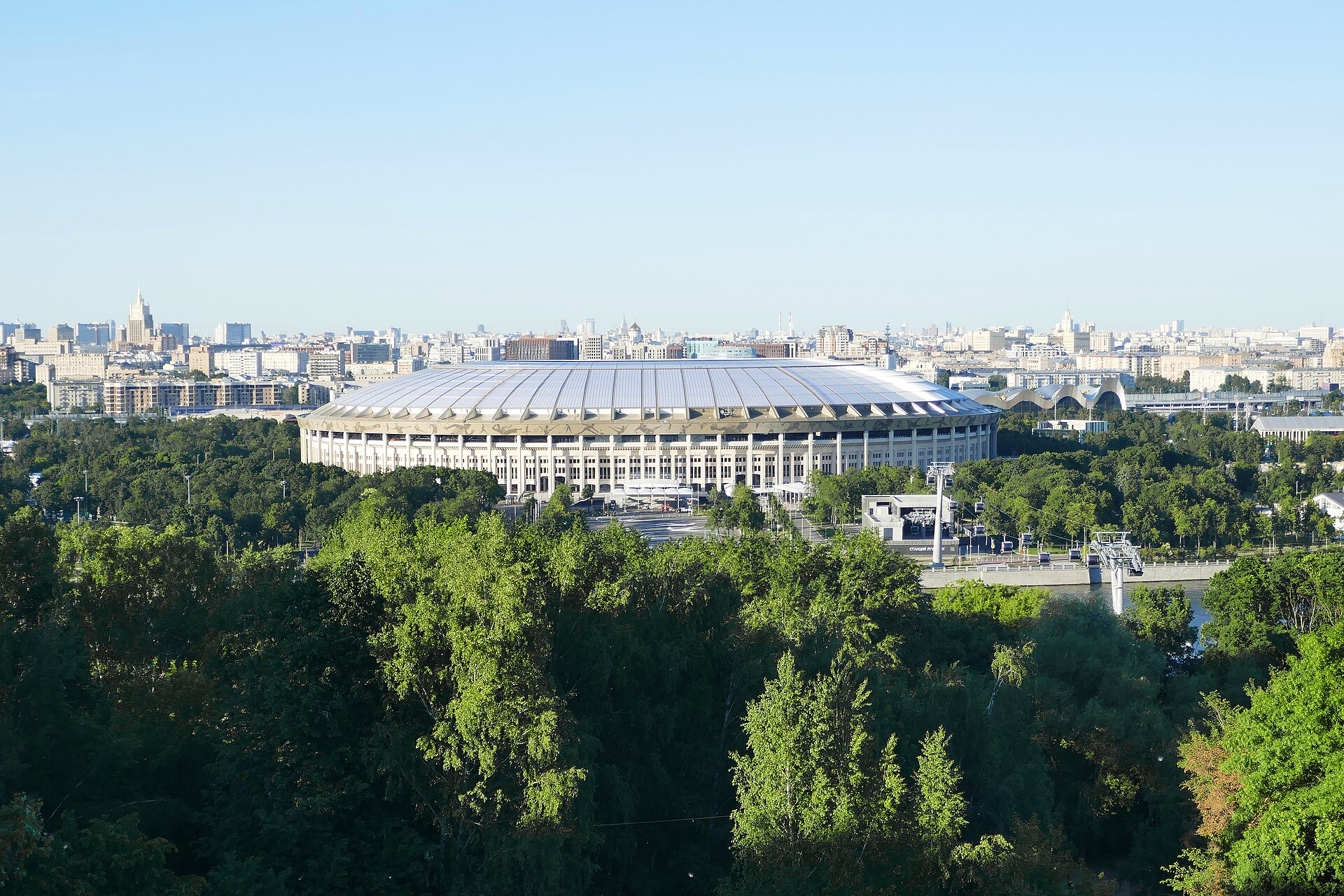
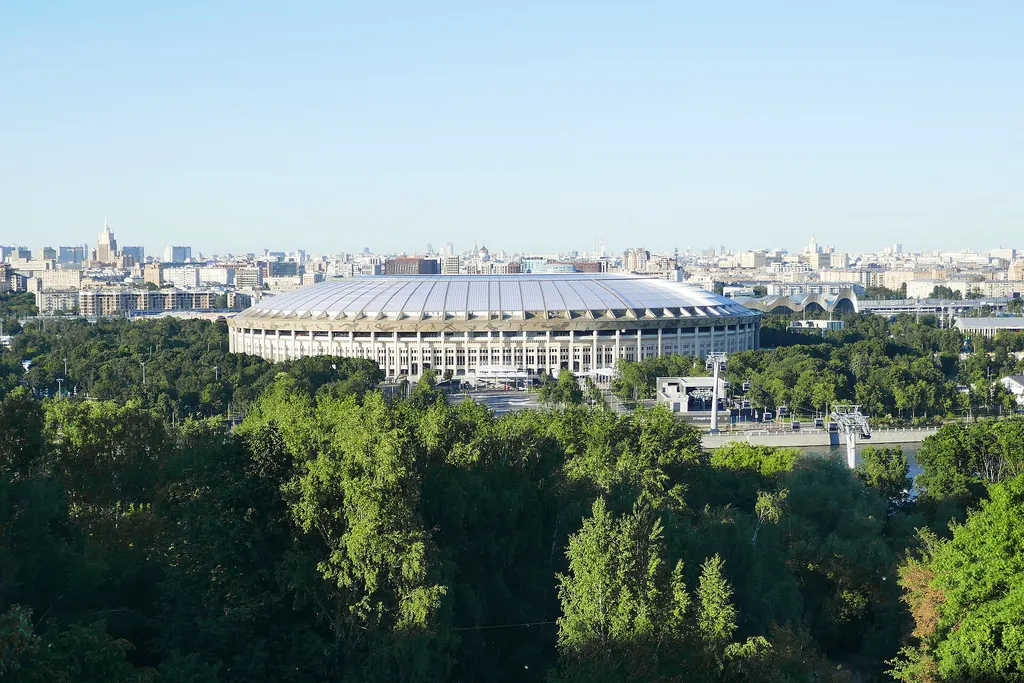
Luzhniki Stadium, also in Moscow, cost 24 billion rubles for its reconstruction, all from public funds. The federal government launched the rebuild in 2014, and the venue reopened in 2018 to host the opening match and the final. Two stadiums in the same city, two entirely different funding models.
Saint Petersburg Stadium: the most expensive venue
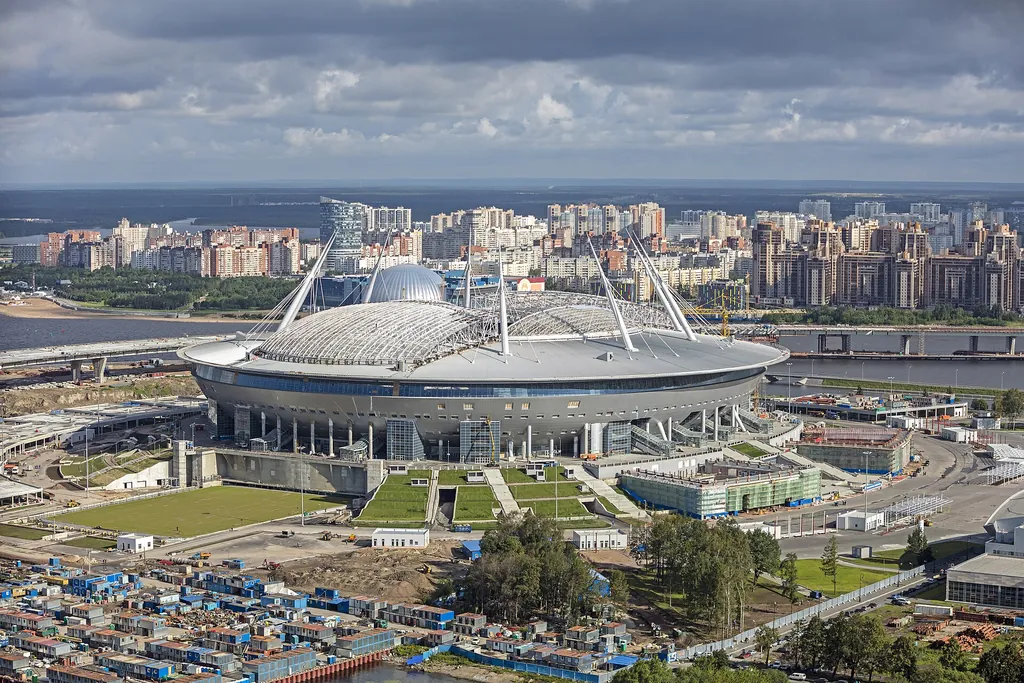
Saint Petersburg Stadium, also called Krestovsky Stadium and, under a naming deal since December 2018, Gazprom Arena, was the costliest of the 12 venues at 43 billion rubles. The Russian state budget funded its construction entirely. FC Zenit Saint Petersburg has called it home since the tournament. During the World Cup it hosted seven matches, including a semifinal and the third-place playoff. The retractable roof and sliding pitch contributed to the high build cost and to ongoing maintenance expenses that remain undisclosed.
Fisht Stadium and the Sochi conversion
Fisht Stadium in Sochi cost 23.5 billion rubles to build for the 2014 Sochi Olympics. Converting it to a football-specific configuration for the World Cup required an additional 4 billion rubles. PFC Sochi became the tenant after the tournament.
Volga region stadiums
Kazan, Samara, Nizhny Novgorod, Volgograd
Four state-funded grounds were built in the Volga region and southern Russia. Kazan Arena cost 19.4 billion rubles. Samara Arena cost 17.3 billion rubles. Nizhny Novgorod Stadium cost an estimated 17.9 billion rubles. Volgograd Arena cost 17.3 billion rubles. Kazan Arena, opened in 2013 and now Ak Bars Arena, and Nizhny Novgorod Stadium, now Sovcombank Arena, were entirely new builds; Volgograd Arena replaced the city's previous stadium on the same site.
Samara's attendance problem
Samara Arena faces a particular challenge: filling the venue consistently. The ground was to be known as Cosmos Arena outside the World Cup; it was renamed Solidarnost Arena in April 2021 and Solidarnost Samara Arena that July. Krylia Sovetov Samara is the home club. Low attendance recurs across several Russian host cities, where the population base and local football culture do not match the scale of the venues built for the tournament.
Smaller markets: Kaliningrad, Ekaterinburg, Rostov
Kaliningrad becomes Rostec Arena
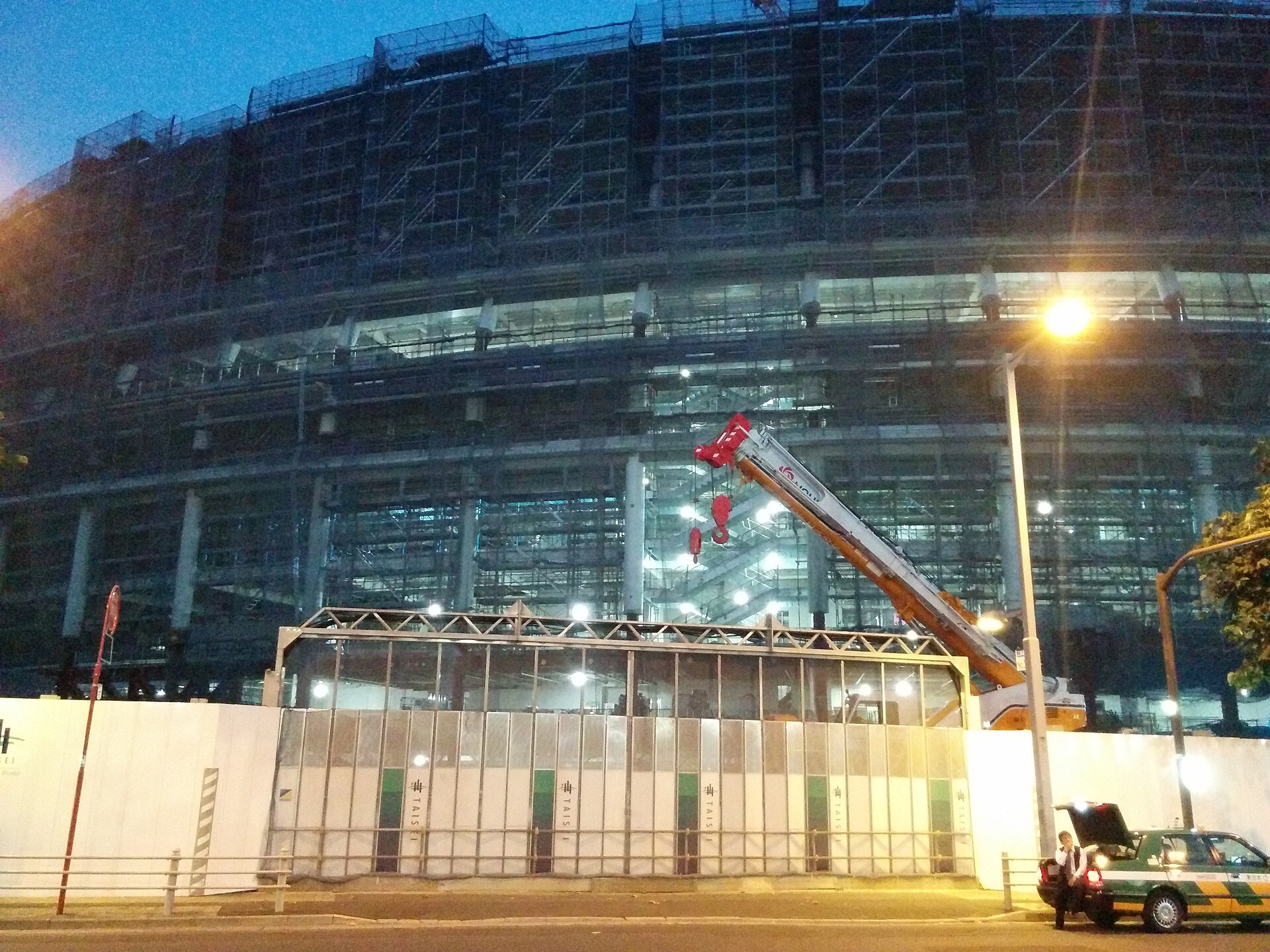
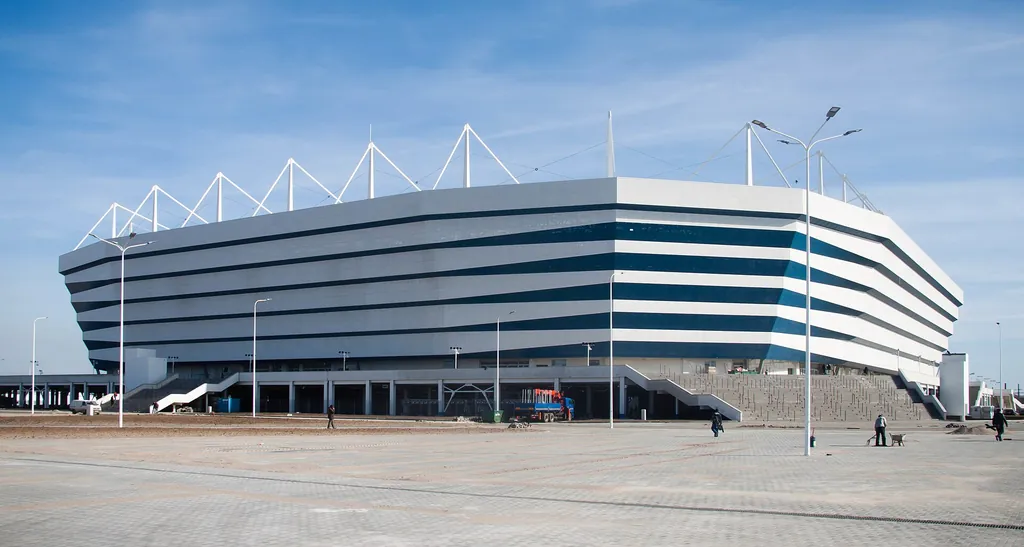
Kaliningrad Stadium was built at a cost of 12.7 billion rubles, the lowest among the new-build venues. FC Baltika Kaliningrad is the tenant. The stadium was renamed Rostec Arena in August 2023 under a sponsorship deal, one of several host venues to take a sponsor's name. The deal provides a revenue stream that helps offset operating costs.
Ekaterinburg and Rostov
Ekaterinburg Arena, also known as Central Stadium, was renovated for the World Cup. The renovation was completed in December 2017. FC Ural Yekaterinburg is the tenant. The renovation reportedly cost about $269 million. Rostov Arena cost 18.2 billion rubles and is the home of FC Rostov. Both venues have local club tenants, but attendance figures have not been consistently reported, and the long-term financial sustainability of these grounds remains an open question. Mordovia Arena in Saransk, reported to have cost between $250 million and $300 million, lost its tenant when FC Mordovia Saransk was dissolved in 2020; FC Saransk has played there since 2021.
Post-tournament legacy: tenants and sponsorship
Stable tenants
Most grounds have post-World Cup tenants. FC Spartak Moscow plays at Spartak Stadium. FC Zenit Saint Petersburg plays at Saint Petersburg Stadium. Krylia Sovetov Samara plays at Samara Arena. FC Ural Yekaterinburg plays at Ekaterinburg Arena. FC Baltika Kaliningrad plays at Kaliningrad Stadium, now Rostec Arena. PFC Sochi plays at Fisht Stadium, Rubin Kazan at Ak Bars Arena, Pari Nizhny Novgorod at Sovcombank Arena, Rotor Volgograd at Volgograd Arena, FC Rostov at Rostov Arena and FC Saransk at Mordovia Arena. These arrangements give the venues a primary user, which is not guaranteed for World Cup stadiums in countries where club football is less developed or where the grounds sit in cities without a top-tier club.
Naming rights after the tournament
Most of the venues now carry a sponsor's name. Saint Petersburg Stadium became Gazprom Arena in December 2018. Kazan Arena became Ak Bars Arena in November 2019. Samara Arena became Solidarnost Arena in April 2021. Kaliningrad Stadium became Rostec Arena in August 2023. Spartak's ground, Otkritie Arena until 2021 and Otkritie Bank Arena until 2023, became Lukoil Arena in January 2024. Nizhny Novgorod Stadium now carries Sovcombank's name. Rostov Arena and Volgograd Arena have no naming sponsor. None of these deals has a published value.
Where things stand now
The 2018 World Cup stadiums remain in use, but the financial picture is incomplete. The clearest commercial development is naming rights: most venues now carry a sponsor's name, the latest being Rostec Arena in Kaliningrad in August 2023, after the state-owned defence conglomerate, and Lukoil Arena in Moscow in January 2024.
Several venues still face challenges. Samara Arena struggles with consistent attendance. The cost of running Saint Petersburg Stadium's retractable roof and sliding pitch is not publicly known. And because none of the naming deals has a published value, how far they offset running costs is unknown.
Frequently asked questions
Which stadium was privately financed?
Spartak Stadium (Otkritie Arena) was the only privately financed host venue, funded by Lukoil at a cost of 14.5 billion rubles ($250 million).
What happened to Kaliningrad Stadium after the World Cup?
It was renamed Rostec Arena in August 2023 under a sponsorship deal with Rostec. Several other host venues have taken sponsors' names too, including Gazprom Arena and Ak Bars Arena.
Do all stadiums have post-tournament tenants?
Most do. FC Spartak Moscow, FC Zenit Saint Petersburg, Krylia Sovetov Samara, FC Ural Yekaterinburg, FC Baltika Kaliningrad, and PFC Sochi are tenants of their respective stadiums.
What are the main legacy challenges?
Some venues, like Samara Arena, struggle with consistent attendance. The cost of maintenance for complex features such as retractable roofs is not publicly known.