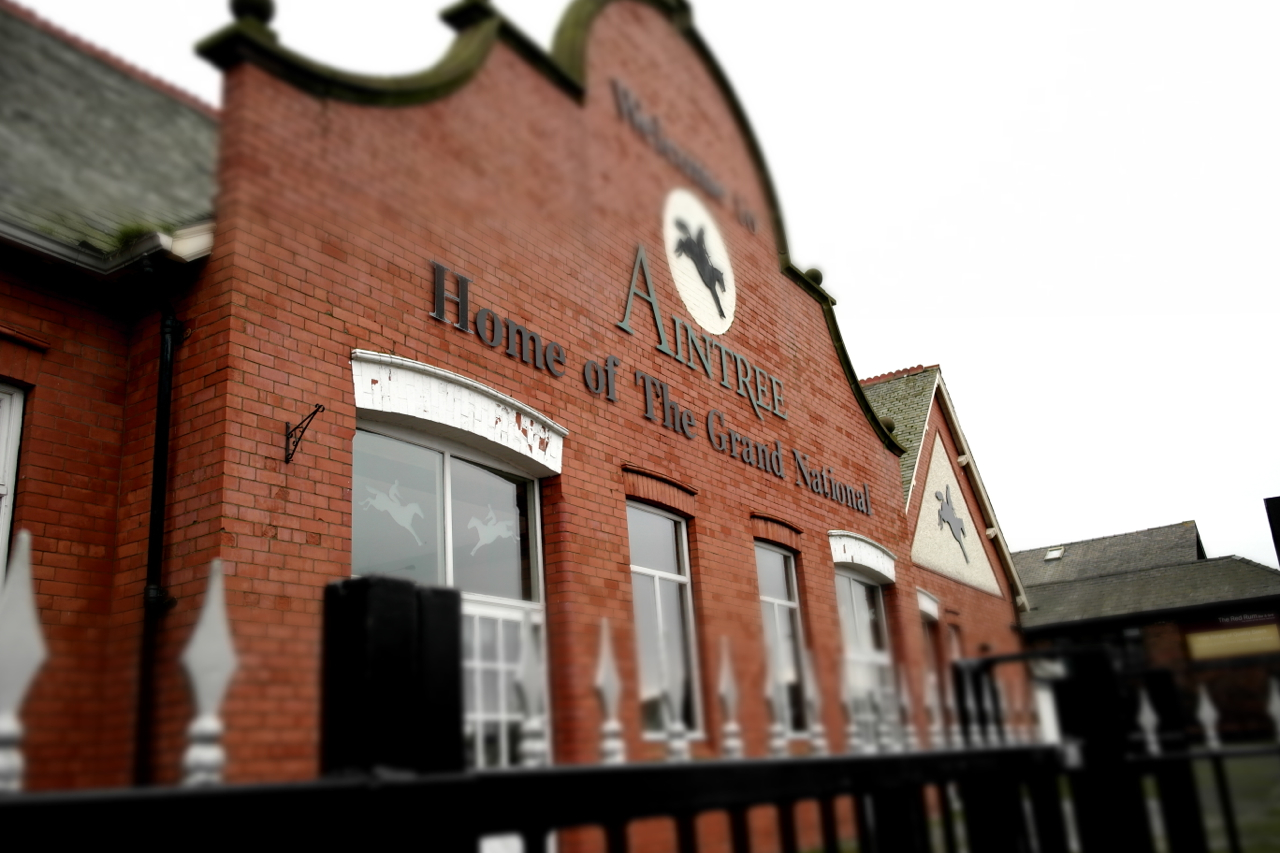
The Grand National at Aintree Racecourse has carried a commercial title partner continuously since 1984, with a single gap: the 2004 race, run without a naming-rights backer after Martell withdrew. Randox Health holds the current deal. Under a five-year extension signed in 2021, the diagnostics firm is committed to the world's most famous steeplechase at least through 2026.
Every change of backer has tracked a shift in regulation, brand strategy or public mood. The model began with a Canadian distiller, moved via French cognac and British bitter, hit a regulatory wall over children watching drinks advertising, and landed on a health-screening company that had no prior link to horse racing.

Seagram: The First Sponsor (1984-1991)
Seagram, the Canadian distiller, became the Grand National's first commercial title backer in 1984. Before that, the race had no naming-rights partner: it was simply the Grand National, staged under the Jockey Club's authority and funded by the racecourse's own revenues and broadcast fees.
Seagram's backing lasted eight years, through the 1991 race. The company's portfolio included Chivas Regal whiskey and Martell cognac, but the name on the race was the corporate parent. The arrangement brought higher prize money and marketing heft to an event that had historically relied on its own prestige rather than a commercial underwriter. The financial terms of the Seagram deal remain undisclosed, and no comparable figure exists for that era of commercial backing in British jump racing.
Martell: Cognac and the Loi Evin (1992-2003)
Martell, a cognac house owned by Seagram, took over the title rights in 1992. For eleven years the race was officially the Martell Grand National. The arrangement looked stable through the 1990s: the brand used the race's international television reach to promote its products in markets where cognac advertising was permitted.
The backing ended abruptly after the 2003 race. The cause was French legislation. The Loi Evin, a 1991 law, severely restricted drinks advertising in France. Martell was headquartered in Cognac and subject to French law. The Loi Evin made it legally untenable for a French company to back a sporting event broadcast into France, even if the event took place abroad. Martell could not continue without risking penalties under French advertising restrictions. The company withdrew after the 2003 running, leaving the 2004 Grand National without a title partner for the first time in twenty years.
2004: The Sponsorless Year
The 2004 Grand National was broadcast and promoted simply as the Grand National. No naming-rights partner appeared on signage, race cards or broadcast graphics. The absence was not for want of interest: several brands were approached, but the gap between Martell's withdrawal and the start of the 2004 season was too short to negotiate and activate a new arrangement.
The Jockey Club, which owns Aintree, treated 2004 as a transitional year rather than a crisis. The race's television audience and betting turnover remained high. The absence of a backer did not significantly dent revenue from media rights and on-course hospitality. The lesson for the Jockey Club was that the Grand National could survive without a title partner, but the commercial value of the naming rights was too large to leave on the table for long. A new backer was secured in time for the 2005 race.

John Smith's: Nine Years of Bitter (2005-2013)
John Smith's, a bitter ale brand owned by Scottish & Newcastle and later Heineken, became the title backer in 2005. The deal lasted nine races, through the 2013 Grand National. By the standards of drinks partnerships in British sport, the arrangement was uncontroversial. John Smith's was a widely distributed draught beer with strong northern English pub associations, and Aintree's Liverpool location made the fit geographically natural.
The deal ended after the 2013 race as part of a broader shift in Heineken's marketing strategy. Heineken, which had acquired John Smith's via its purchase of Scottish & Newcastle in 2008, was consolidating its brand portfolio and chose not to renew. The departure was amicable and not driven by regulatory pressure or public controversy. John Smith's had been a stable partner, but by 2013 the landscape of drinks backing in British sport was beginning to draw scrutiny from regulators and campaign groups.
Crabbie's: The Regulatory Reckoning (2014-2016)
The Short-Lived Deal
Crabbie's, an alcoholic ginger beer brand owned by Halewood International, took over as title backer in 2014. The drink had a 4.8% ABV and was marketed as a premium bottled product. The partnership brought Crabbie's into the mainstream of British sporting backing, but it lasted only three years.
The Portman Group Ruling
The end was forced by a ruling from the Portman Group, the UK drinks industry's self-regulatory body. In 2016, the Portman Group upheld a complaint against Crabbie's, ruling that it was irresponsible to associate an alcoholic brand with a sporting event featuring a high number of child spectators. The Grand National is one of the few major British sporting events where children attend in large numbers as general spectators, not just in family enclosures. The regulator's decision effectively made it impossible for Crabbie's to continue. Halewood International did not appeal. The backing was terminated, and the 2016 race was the last to carry the Crabbie's name.
Randox Health: The Diagnostics Era (2017-Present)
A New Kind of Partner
Randox Health, a diagnostics and health-screening company based in Northern Ireland, was announced as the new title backer in 2016, taking over from the 2017 race. The partnership broke the pattern of drinks backers that had dominated since 1984. Randox Health had no connection to alcoholic beverages and no previous involvement with horse racing. The company's business is blood testing, genetic analysis and preventive health checks.
The 2021 Extension
The initial deal ran for several years. In 2021, Randox and the Jockey Club signed a five-year extension that runs through the 2026 Grand National. The extension was announced during the COVID-19 pandemic, a period in which Randox had become a household name in Britain via its role in providing PCR testing. The company's public profile rose sharply during that period, but its commitment to the Grand National was already in place and was not a consequence of pandemic-era contracts.

The Commercial Model in 2024
Randox's Staying Power
Randox Health remains the title backer as of the latest confirmed deal, which extends to 2026. The partnership has outlasted every previous backer except Seagram and John Smith's. The race is now marketed as the Randox Grand National, and the Randox brand appears on the famous fences, the prize fund and the broadcast graphics.
The Financial Picture
The financial terms of the Randox arrangement have not been published. Industry estimates for title backing of a major British sporting event of this stature typically run into the low millions of pounds annually, but the Jockey Club and Randox have not confirmed a figure. The duration of the 2021 extension suggests both parties are satisfied. The Grand National has now had a title backer for forty of the forty-two races run since 1984, with only the 2004 race falling outside the pattern.
What the Sponsorship History Reveals
Regulation, Not Commercial Failure
The sequence of backers shows how external regulation, not commercial failure, has been the main driver of change. Seagram ended its backing via a corporate reorganization. Martell was forced out by French drinks advertising law. Crabbie's was effectively banned by a British industry regulator acting on child-protection grounds. John Smith's was the only backer to leave voluntarily, without external compulsion.
A Broader Shift in British Sport
The move from drinks to health diagnostics reflects a wider trend in British sports backing. Alcoholic beverage brands, once the default partners for racing, football and rugby, have faced tightening restrictions and reputational pressure. The Grand National's switch to Randox coincided with similar shifts in other sports, though the mechanism was unusually direct: a regulator's ruling rather than a gradual decline in the value of drinks association. The commercial model has proved resilient through all these changes. The race has never lacked a backer for more than a single year since 1983.
Key Facts: Grand National Title Sponsors
- First sponsor: Seagram (1984-1991)
- Current sponsor: Randox Health (2017-present)
- Current deal expires: 2026 (five-year extension signed 2021)
- Year with no sponsor: 2004
- Sponsor forced out by regulation: Martell (Loi Evin) and Crabbie's (Portman Group ruling)
Grand National Title Sponsors: Timeline
| Sponsor | Years | Duration | Reason for end |
|---|---|---|---|
| Seagram | 1984-1991 | 8 years | Corporate restructuring |
| Martell | 1992-2003 | 12 years | French Loi Evin alcohol advertising restrictions |
| No sponsor | 2004 | 1 year | Transitional period after Martell withdrawal |
| John Smith's | 2005-2013 | 9 years | Heineken brand portfolio consolidation |
| Crabbie's | 2014-2016 | 3 years | Portman Group ruling on child spectators |
| Randox Health | 2017-2026 | 10 years (current) | In progress, extension signed 2021 |
Frequently Asked Questions
Who sponsored the Grand National in 2024?
Randox Health sponsored the Grand National in 2024 under a deal that runs through 2026.
Why did Crabbie's stop sponsoring the Grand National?
Crabbie's ended its sponsorship after the Portman Group, the UK alcohol industry regulator, ruled in 2016 that associating an alcoholic brand with an event attended by large numbers of children was irresponsible. The ruling made the sponsorship untenable.
Has the Grand National always had a sponsor?
No. The first commercial sponsor began in 1984. The race had no title sponsor in 2004, the year after Martell withdrew. It has had a sponsor in every other year since 1984.