Businessbusiness

Super Bowl LIV 2020 sponsor and ad lineup

Fox charged approximately $5.6 million for a 30-second spot during Super Bowl LIV. We list the confirmed advertisers, including political buyers and digital newcomers.
super-bowl-2020-sponsors

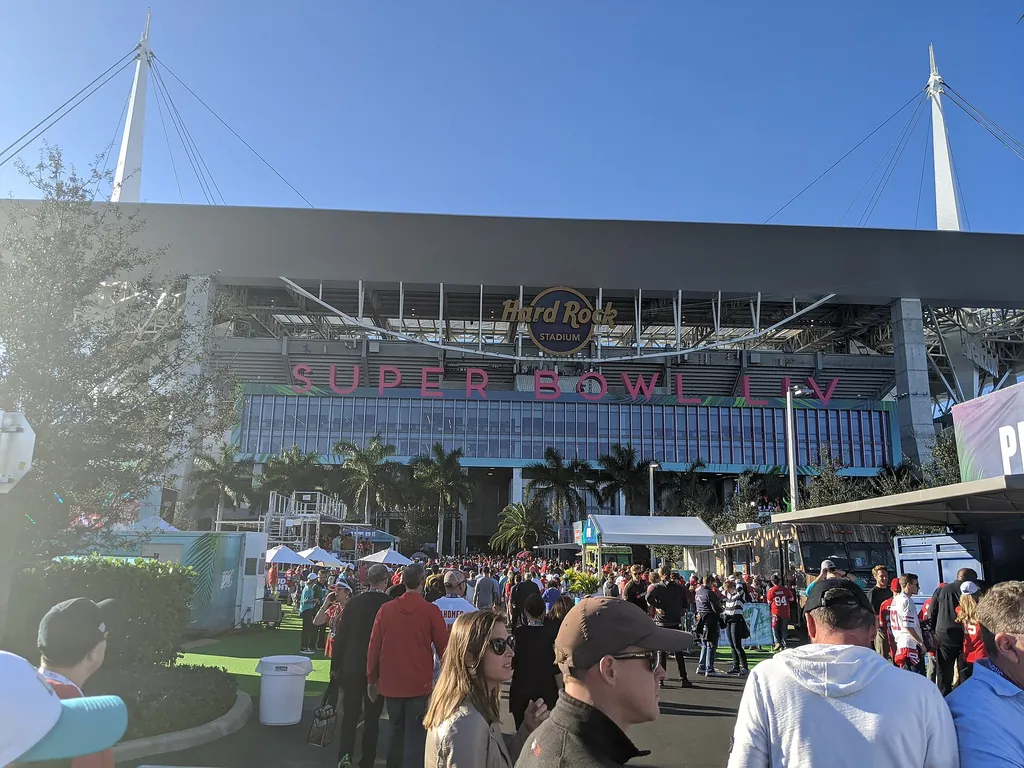
Super Bowl LIV was played on February 2, 2020, at Hard Rock Stadium in Miami Gardens, Florida. The Kansas City Chiefs defeated the San Francisco 49ers 31-20. The game aired on Fox. Fox sold 30-second commercial slots for a reported $5.6 million each, a figure set by the network's sales team. The commercial spots aired as scheduled, and the political ad buys by Michael Bloomberg and Donald Trump were executed without network intervention. Jennifer Lopez and Shakira performed the Pepsi-sponsored halftime show.

The $5.6 million price tag for a 30-second slot was in line with the previous year's rate, which Fox had also reported at roughly $5.25 million. At that price, a 60-second ad cost $11.2 million, a figure that mattered because two political campaigns bought time at those lengths. The 2020 game marked a notable moment for political advertising in the Super Bowl, with both a sitting president and a challenger purchasing airtime. It also drew first-time advertisers from the tech and food sectors, alongside returning heavy spenders like Anheuser-Busch InBev and Amazon.

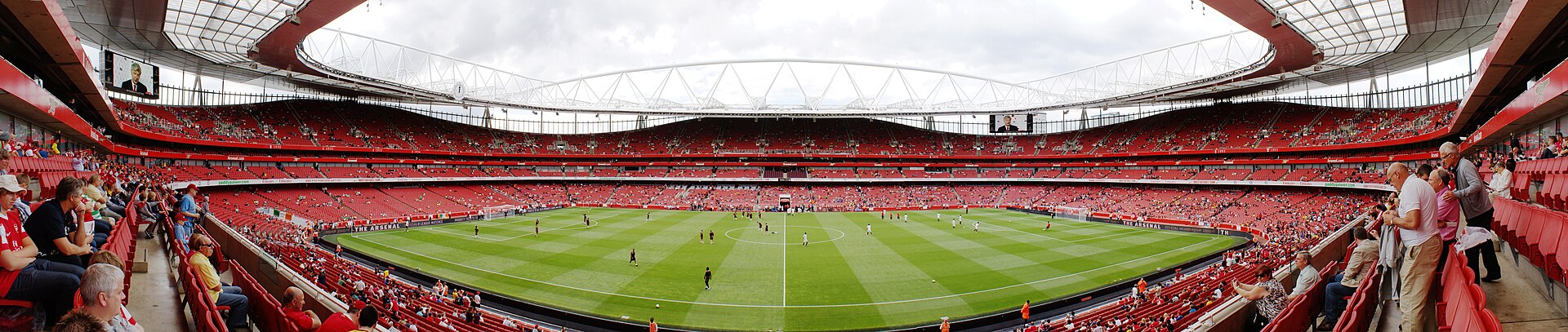
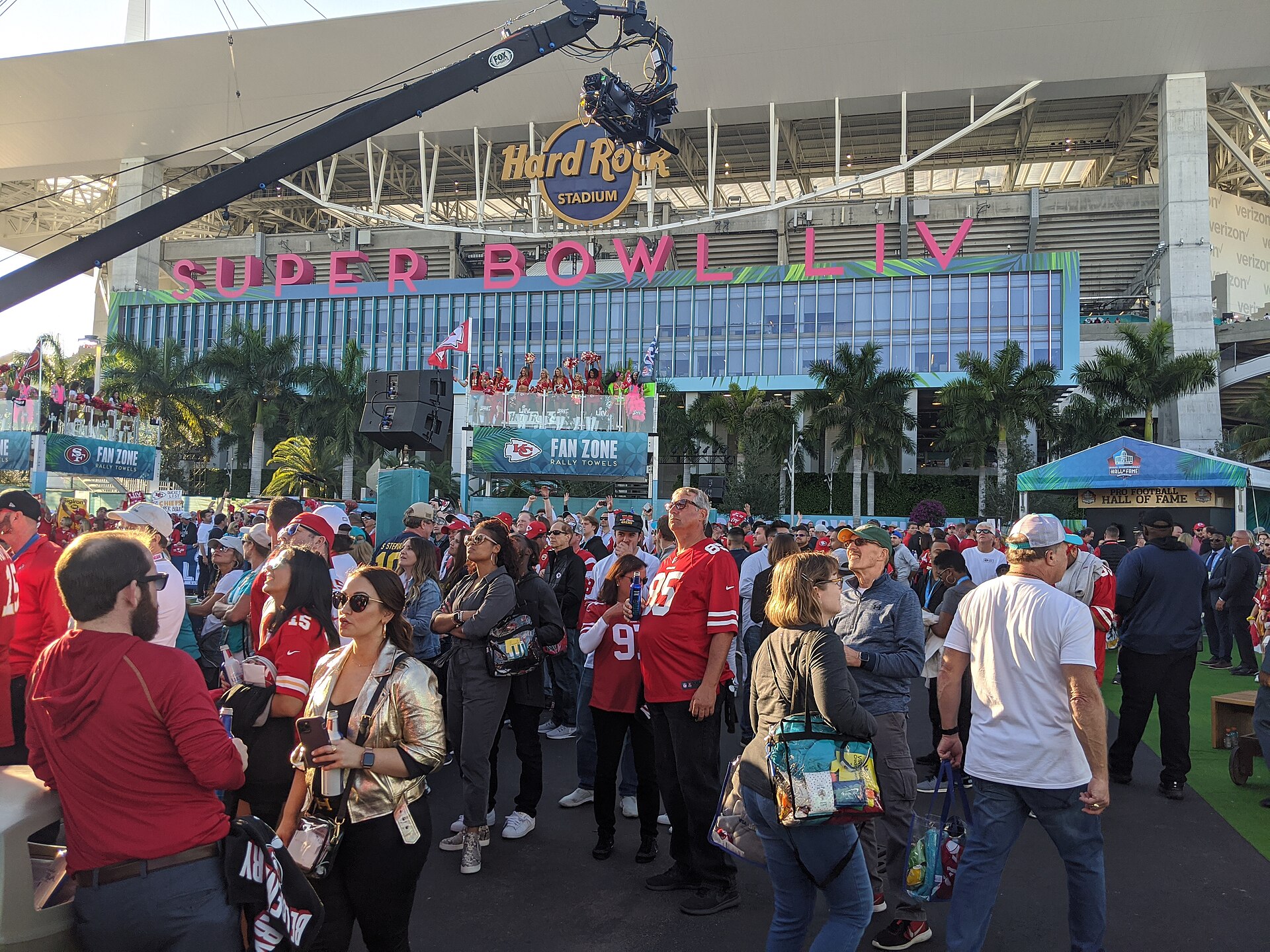
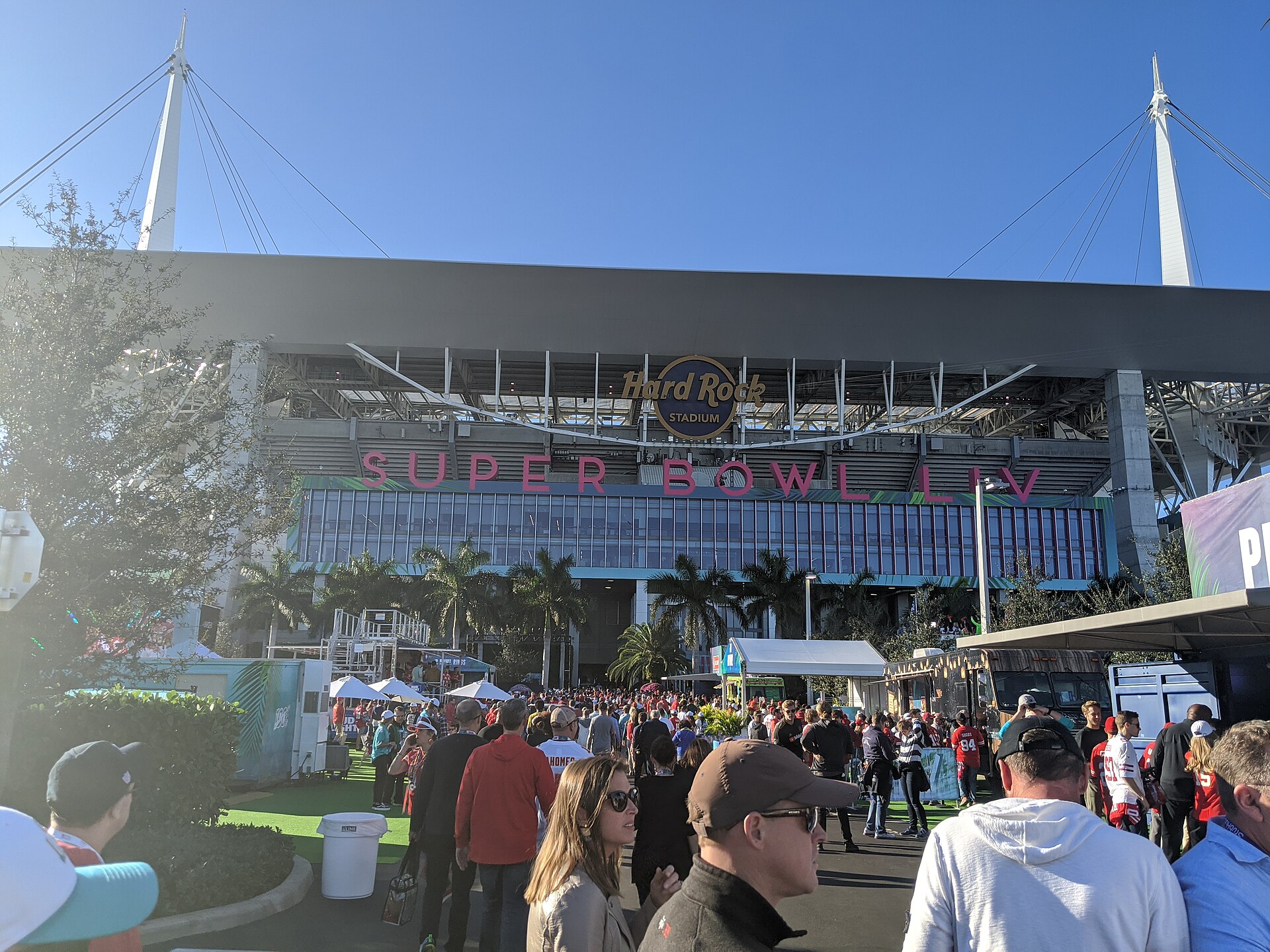
Hard Rock Stadium Miami Gardens
A.J. Lipp, Wikimedia Commons, CC BY-SA 4.0

The $5.6 Million 30-Second Slot and What It Bought

Fox charged a reported $5.6 million for each 30-second commercial slot during Super Bowl LIV. That figure was an increase from the $5.25 million CBS had commanded for Super Bowl LIII in 2019. The price reflected the Super Bowl's continued status as the most expensive single-event advertising opportunity on US television. For that fee, advertisers got a guaranteed national audience that had historically numbered above 100 million viewers, though exact viewership figures for 2020 are not broken down here by platform.

The $5.6 million covered only the cost of the airtime. Production costs for the commercials themselves were separate and often ran into the millions for elaborate special effects, celebrity endorsements, and licensed music. Brands typically spent as much on producing the ad as they did on buying the slot, sometimes more. The total investment for a 60-second spot, including production, could exceed $15 million. Fox did not disclose total aggregate revenue from Super Bowl LIV spots, so the network's exact take from commercial sales is not established here.

First-Time Super Bowl Advertisers

Facebook bets on community

Facebook ran a 30-second ad that focused on the social network's groups and community features, rather than on the company's broader business. The ad was part of a larger brand-awareness push that Facebook had begun in 2019, after years of relying on user-generated growth and targeted digital ads. The Super Bowl buy was Facebook's first attempt at reaching a mass television audience during a live event.

Sabra pushes a new product

Sabra, the hummus and dips brand co-owned by PepsiCo and Strauss Group, used its first Super Bowl slot to promote a new product line.

Little Caesars touts delivery

Little Caesars, the Detroit-based pizza chain, advertised its delivery service, which it had been expanding nationally.

Each of the three brands had a different reason for entering the most expensive advertising environment in US media.

Returning Heavy Spenders

Anheuser-Busch InBev dominates airtime

Anheuser-Busch InBev purchased multiple minutes of airtime across its beer brands, including Bud Light and Michelob Ultra. The company had been a Super Bowl advertiser for decades and typically bought more total time than any other single advertiser. In 2020, its Bud Light campaign featured a multi-part narrative that ran across several commercial breaks, while Michelob Ultra emphasized its low-calorie positioning. The brewer's total investment in Super Bowl LIV airtime was not disclosed, but it was widely reported to be the largest single advertiser by volume.

Amazon returns with Alexa and celebrity power

Amazon returned as a Super Bowl advertiser, promoting its Alexa voice assistant. The 90-second spot featured Ellen DeGeneres and Portia de Rossi, with DeGeneres interacting with Alexa in a series of household scenarios. Amazon had first advertised on the Super Bowl in 2019 with a spot for the Echo. The 2020 ad was part of a broader strategy to position Alexa as a mainstream consumer product, not just a tech gadget. Amazon did not disclose the production cost of the DeGeneres spot, but the use of two high-profile celebrities and a lengthy runtime suggested a budget in the millions.

Super Bowl LIV halftime show Jennifer Lopez Shakira
elisfkc2, Wikimedia Commons, CC BY-SA 2.0

Political Ads: Trump and Bloomberg Break Tradition

Super Bowl LIV was the first Super Bowl to feature a 60-second national ad from a presidential candidate and a 30-second national ad from an incumbent president. Michael Bloomberg's presidential campaign purchased a 60-second spot. Donald Trump's re-election campaign purchased a 30-second spot. Both ads aired on Fox during the game without network intervention, meaning Fox did not alter or reject the content of either commercial.

Bloomberg's ad focused on gun safety and his record as mayor of New York City. Trump's ad highlighted his first-term economic record. Political advertising in the Super Bowl had been rare. In previous years, only a handful of candidates had bought time, and most had done so in local markets rather than nationally. The 2020 buys were notable not only for their length and cost, but because they placed two opposing campaigns in the same broadcast, each reaching the same audience of more than 100 million viewers. The ads were executed as scheduled, and no last-minute pullouts occurred.

Pepsi and the Halftime Show: Shakira and Jennifer Lopez

PepsiCo, through its Pepsi brand, was the official sponsor of the Super Bowl LIV Halftime Show. The performance featured Shakira and Jennifer Lopez, two artists with global followings and Latin American heritage. The choice of performers reflected the game's location in Miami Gardens, a city with a large Hispanic population. Pepsi had been the halftime show sponsor since 2013, and the 2020 show continued that partnership.

The halftime show itself was a 12-minute production with multiple costume changes, choreographed dance routines, and guest appearances. Shakira opened with a medley of her hits, followed by Lopez performing a set that included a pole-dancing sequence and a brief appearance by her daughter. The show drew mixed reviews, with some critics praising the energy and others questioning the appropriateness of certain elements for a family broadcast. Pepsi's sponsorship included on-screen branding during the broadcast and promotional campaigns in the weeks leading up to the game. The company did not disclose the cost of the sponsorship, but similar deals in prior years had been valued at roughly $50 million annually.

The Broadcast: Fox and the Streaming Picture

Super Bowl LIV aired on Fox, which had won the rights to broadcast the game as part of the NFL's rotating network schedule. Fox sold its commercial inventory directly to advertisers, with the $5.6 million per 30-second slot applying to national spots. Local affiliates also sold regional ad time to businesses in their markets, at rates that varied by market size and demand.

The game was also streamed on Fox's digital platforms, including the Fox Sports app and Fox.com. The streaming feed carried the same national commercials as the broadcast, meaning that advertisers who bought national spots reached both television and online viewers. Exact viewership figures broken down by broadcast versus streaming are not established here, but the combined audience was estimated by industry analysts to have exceeded 100 million. Fox's decision to stream the game without requiring a cable login, a departure from earlier Super Bowls, reflected the growing importance of digital distribution for live sports.

Fox Sports Super Bowl LIV broadcast
Anthony Quintano from Westminster, United States, Wikimedia Commons, CC BY 2.0

How the Game Ended and What the Ads Accomplished

Super Bowl LIV concluded with the Kansas City Chiefs defeating the San Francisco 49ers 31-20. The game was competitive through three quarters, with the 49ers leading 20-10 heading into the fourth. The Chiefs scored 21 unanswered points in the final period, securing the franchise's first Super Bowl title in 50 years. The result had no direct bearing on the commercials that aired during the broadcast, but it affected the demographic composition of the audience in the fourth quarter, when viewership typically peaks.

The commercial spots aired as scheduled, and the political ad buys by Bloomberg and Trump were executed without network intervention. The ads were seen by the same audience that watched the game, and each advertiser paid the $5.6 million per 30-second rate regardless of whether the game was close or a blowout. For first-time advertisers like Facebook, Sabra, and Little Caesars, the Super Bowl buy was a bet on brand awareness rather than direct response. For returning advertisers like Anheuser-Busch InBev and Amazon, the game was a familiar platform to reinforce existing brand positioning.

What the 2020 Super Bowl Ad Market Revealed

The 2020 Super Bowl ad market showed that the event remained the single most expensive and most-watched advertising opportunity in US television. The $5.6 million rate was a new high, and the willingness of first-time advertisers like Facebook to pay it signaled that the Super Bowl was no longer just a platform for beer, soda, and car companies. The political ad buys by Trump and Bloomberg demonstrated that the game had become a venue for national political messaging, a development that had been building slowly over the previous decade.

The presence of both a sitting president and a challenger in the same ad break was unprecedented. The fact that Fox aired both spots without edits or rejection confirmed that the network treated political advertising the same as commercial advertising, applying no special scrutiny beyond normal legal review. The 2020 game also reinforced the dominance of Pepsi as the halftime show sponsor, a position it held until 2022 when it was replaced by Apple Music. As of March 2025, the 2020 Super Bowl remains a reference point for the intersection of sports, advertising, and politics at the highest level of US media spending.

Key Facts: Super Bowl LIV Sponsors and Commercials

  • Date: February 2, 2020
  • Location: Hard Rock Stadium, Miami Gardens, Florida
  • Network: Fox
  • Cost of 30-second slot: $5.6 million (reported by Fox)
  • Halftime show sponsor: PepsiCo (Pepsi brand)
  • Halftime performers: Shakira and Jennifer Lopez
  • First-time advertisers: Facebook, Sabra, Little Caesars
  • Political ad buyers: Michael Bloomberg (60 seconds), Donald Trump (30 seconds)
  • Returning major advertisers: Anheuser-Busch InBev (multiple brands), Amazon (Alexa)
  • Game result: Kansas City Chiefs 31, San Francisco 49ers 20

Major Advertisers and Their Investments in Super Bowl LIV

Advertiser Spot Length First-Time or Returning Notable Campaign Detail
Michael Bloomberg campaign 60 seconds First-time (political) Gun safety message
Donald Trump campaign 30 seconds First-time (political) Economic record
Facebook 30 seconds First-time Community and groups focus
Sabra 30 seconds First-time New product promotion
Little Caesars 30 seconds First-time Delivery service ad
Amazon 90 seconds Returning Alexa with Ellen DeGeneres
Anheuser-Busch InBev Multiple minutes Returning Bud Light and Michelob Ultra campaigns

Frequently Asked Questions About Super Bowl LIV Sponsors

How much did a 30-second Super Bowl LIV commercial cost?

Fox sold 30-second slots for a reported $5.6 million each.

Who sponsored the halftime show at Super Bowl LIV?

PepsiCo, through its Pepsi brand, was the official sponsor. The performers were Shakira and Jennifer Lopez.

Which brands advertised on the Super Bowl for the first time in 2020?

Facebook, Sabra dipping products, and Little Caesars were first-time Super Bowl advertisers.

Did Donald Trump and Michael Bloomberg air Super Bowl ads?

Yes. Michael Bloomberg's campaign bought a 60-second national spot, and Donald Trump's campaign bought a 30-second national spot. Both aired on Fox without network intervention.

About the author

, Editor

Kenneth Ma is the editor of LeadMonitor.ai, covering the companies, deals and policy decisions shaping business and technology markets.

View all 427 articles by Kenneth Ma  ·  Our editorial policy

Recent Stories

How to make money selling Canva templates

How to highlight text in Canva

How to print from Canva without quality loss

How to check if Canva is down right now

How to group and ungroup elements in Canva

How to stretch an image in Canva

How to make a QR code in Canva

Convert Canva to PowerPoint and Google Slides