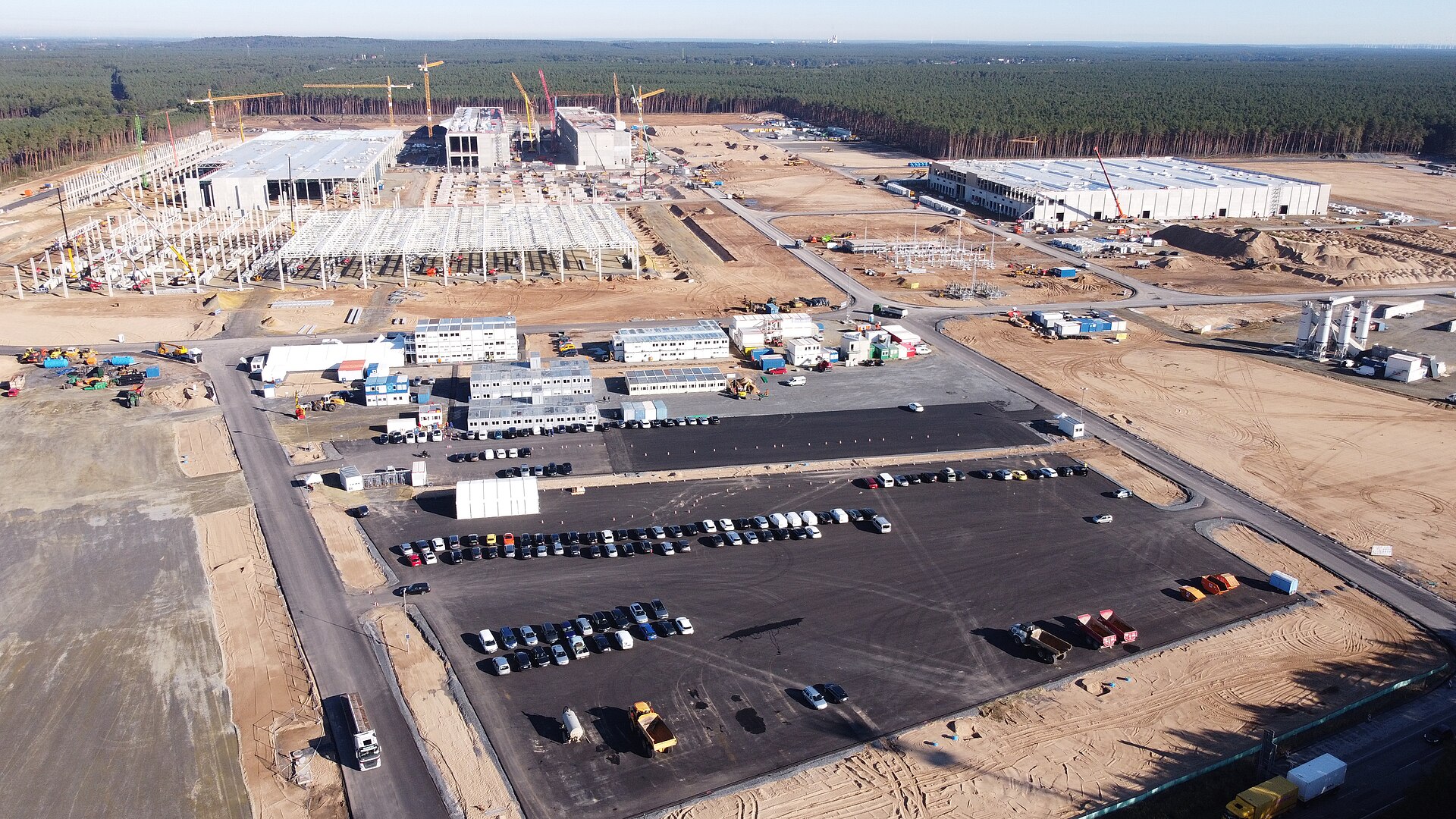
Tesla seriously evaluated building its first European Gigafactory in Somerset, England, but chose a site near Berlin instead. The UK’s 2016 vote to leave the European Union created regulatory, trade and labour uncertainties that made a British plant unviable. Elon Musk stated in November 2019 that Brexit uncertainty made a UK site ‘too risky’. The Berlin plant, Gigafactory Berlin-Brandenburg, was announced on 12 November 2019, began construction in early 2020, and started producing cars in March 2022. The Somerset location was rejected.
The choice cost the UK a multi-billion-dollar investment and thousands of jobs. The Grünheide site in Brandenburg builds the Tesla Model Y and power cells. The UK government tried to salvage the deal but could not overcome the structural barriers Brexit introduced.

The Site Tesla Considered in the UK
Tesla evaluated Gravity, a smart campus in Somerset, as the location for its first European Gigafactory. Gravity is a large business park near Bridgwater, designed for advanced manufacturing and technology companies. The location offered good road access, proximity to the port of Bristol, and available land for a large-scale plant. Tesla needed a site that could support cell production and vehicle assembly, with reliable energy supplies and logistics connections to continental Europe.
Gravity’s developers marketed the campus as a purpose-built environment for high-tech industry. Tesla’s interest was serious enough that the company assessed the site. The UK government was aware of Tesla’s interest and engaged in discussions about incentives and support. But the Brexit vote in June 2016 had already begun reshaping the business environment for foreign manufacturers.
The Timeline from UK Interest to Berlin Decision
Early search and the UK’s appeal
Tesla’s search for a European Gigafactory site began in earnest around 2016 and 2017. The company already had a European headquarters and assembly facility in Tilburg, Netherlands, but needed a larger operation for full vehicle production and cell manufacturing. The UK, with its established automotive industry and engineering talent, was a natural candidate. Tesla evaluated the Somerset site alongside other European locations.
The final two
In late 2019, the choice came down to the UK and Germany. On 12 November 2019, Tesla announced it would build Gigafactory Berlin-Brandenburg in Grünheide, Brandenburg. The announcement came less than three months before the UK was due to leave the EU on 31 January 2020. Musk made clear that Brexit uncertainty was the decisive factor. The UK site in Somerset was rejected. Construction in Berlin began in early 2020.
What Made Brexit a Dealbreaker for Tesla
Regulatory divergence
Brexit created three specific problems for automotive manufacturing in the UK. First, regulatory divergence. Tesla’s cars and power packs must meet EU standards to be sold across the continent. A UK plant would face the risk that future UK regulations would diverge from EU rules, forcing Tesla to produce different versions for different markets or to duplicate testing and certification.
Trade barriers
Second, trade barriers. After Brexit, the UK and EU introduced customs checks, rules of origin requirements, and potential tariffs on automotive goods. Tesla’s supply chain spans Europe. Tariffs on components or finished vehicles would add cost and complexity.
Labour mobility
Third, labour mobility. Tesla’s operation would need skilled engineers and technicians from across Europe. Brexit ended the free movement of people, making it harder to recruit and retain EU workers.
These uncertainties could not be resolved quickly. Tesla needed certainty about the rules for the next decade. The UK government could not provide that certainty while the Brexit deal was still being negotiated. Musk chose Germany, where EU membership guaranteed stable access to the single market.

The UK Government’s Attempts to Salvage the Deal
The UK government made efforts to keep Tesla’s investment. Officials from the Department for International Trade and local authorities in Somerset engaged with Tesla about incentives, infrastructure support, and planning permissions. The government could offer financial incentives, but it could not remove the fundamental uncertainty created by Brexit. The timing was particularly bad. Tesla announced its choice in November 2019, two months before the UK’s scheduled departure from the EU. The final terms of the Brexit trade deal were not agreed until December 2020, more than a year after Tesla had chosen Berlin.
The UK government’s inability to guarantee frictionless trade with the EU, aligned regulations, and free movement of labour made the UK site uncompetitive. No amount of subsidy could compensate for the structural risk. Tesla’s move was a clear signal that post-Brexit Britain would struggle to attract large-scale manufacturing investments that depend on European supply chains.
What the UK Lost
A multi-billion-euro industrial campus
Gigafactory Berlin-Brandenburg is a major industrial facility. It produces the Tesla Model Y and power cells. The plant began turning out cars in March 2022 and has expanded since. The investment value runs into billions of euros. The site employs thousands of workers. The UK lost all of that. The Somerset location at Gravity remains undeveloped for Tesla’s purposes.
Supply chain and spillover effects
The UK also lost the supply chain jobs, the tax revenue, and the technological spillover effects that a Gigafactory would have generated. The choice reinforced a broader pattern: after Brexit, the UK became a less attractive location for large-scale automotive and cell manufacturing. Other companies, including cell manufacturers and electric car startups, have also chosen EU locations over the UK.
A reputational blow
The loss was not just economic. It was a reputational blow. A company led by Elon Musk, one of the most visible entrepreneurs in the world, publicly stated that the UK was too risky. That statement influenced other investment decisions.
Were Other European Sites in Contention
The brief does not confirm whether any other European countries besides the UK and Germany were final contenders. Tesla evaluated multiple sites across Europe, but the choice came down to the UK and Germany. The brief states that Tesla’s European headquarters and assembly facility was already in Tilburg, Netherlands, but that does not mean the Netherlands was a candidate for the Gigafactory. Germany offered a strong automotive supply chain, government support from the state of Brandenburg, and EU membership. The UK offered a skilled workforce and an existing automotive sector, but Brexit made the difference. Tesla’s selection of Berlin was a clear statement: for a company that depends on European integration, the UK outside the EU was too risky.
The outcome is concluded. Tesla selected Berlin, announced in November 2019. The UK site was rejected. Gigafactory Berlin-Brandenburg was built and began producing cars in March 2022. As of March 2025, the situation has not changed.
Key Facts
- UK EU membership referendum: 23 June 2016
- Tesla announced Gigafactory Berlin-Brandenburg: 12 November 2019
- Elon Musk on UK factory: Brexit uncertainty made a UK factory ‘too risky’ (November 2019)
- Location of Berlin factory: Grünheide, Brandenburg, Germany
- Construction start: Early 2020
- Vehicle production start: March 2022
- Products at Berlin factory: Tesla Model Y and battery cells
- UK site evaluated: Gravity smart campus, Somerset
- Tesla’s existing European facility: Tilburg, Netherlands (headquarters and assembly)