Five Guys sells about 2,000 burgers per restaurant per day across roughly 1,700 locations worldwide. Each burger is rung up on a point of sale terminal. Many are paid for with a credit card. Some are ordered through an app. The customer might be watching a digital menu board while they wait. The store is probably streaming background music. All of that data travels through networks, lands in a data center, and burns power. The carbon cost of that online activity is almost never included in the restaurant industry's sustainability accounting.
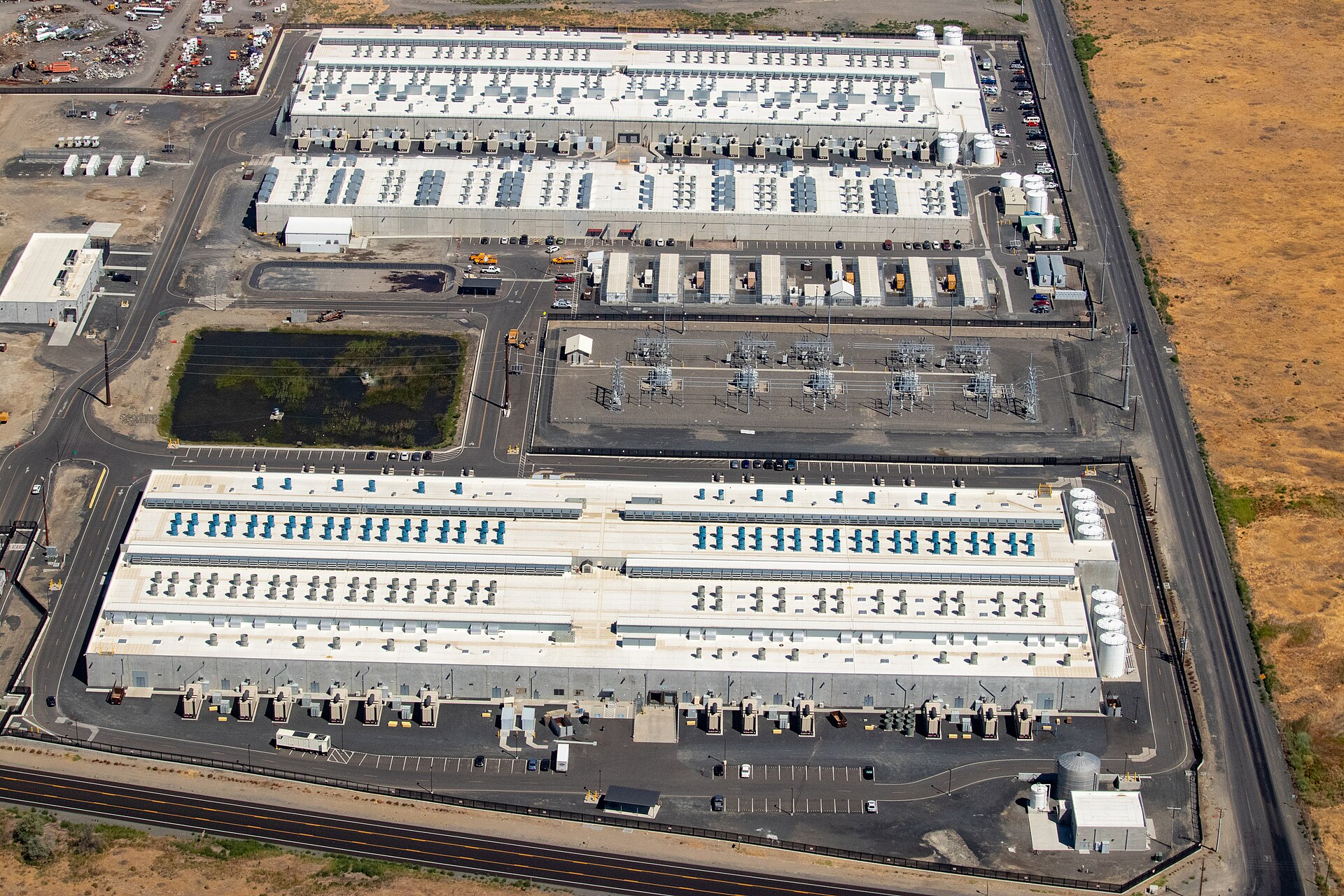
Data centers consumed an estimated 1 to 1.3 percent of global final electricity demand in 2022, excluding cryptocurrency mining, according to the International Energy Agency. That share has stayed roughly flat for years, even as compute workloads exploded, because hyperscale cloud providers have become dramatically more efficient. But the restaurant industry has not yet reckoned with its portion of that consumption. The online operations of a large fast food chain generate real greenhouse gases, and they are invisible in most corporate carbon reports.

What counts as a restaurant's data operations
When a restaurant chain talks about its carbon impact, it typically means the fuel used to transport ingredients, the power that lights the dining room and runs the fryers, and the methane emitted by cattle. Data rarely appears. Yet a modern chain runs dozens of software systems that each consume energy in data centers and networks.
The roster covers point of sale terminals that send every transaction to a central server. It covers loyalty applications that track customer visits and preferences. It covers cloud based inventory management systems that tell managers when to order more potatoes. It covers digital menu boards that update prices and promotions in real time. It covers guest Wi Fi networks. It covers the background music streaming service. It covers the video feeds from security cameras. It covers the systems that schedule staff shifts.
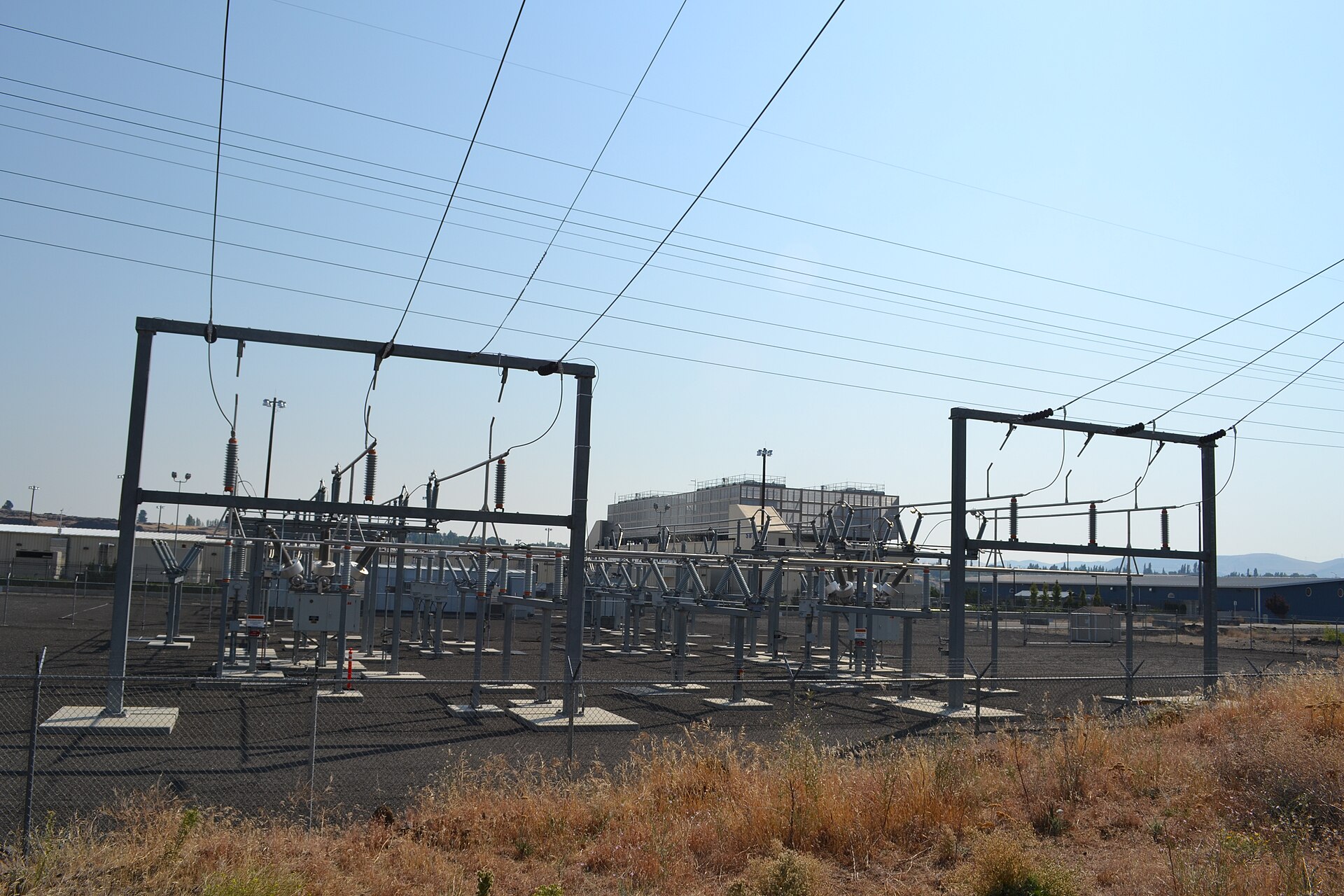
Each of these activities generates data that must be stored, processed, and transmitted. That data lives in a data center somewhere, and every kilowatt hour the data center draws has a carbon cost determined by the local grid's energy mix.
The carbon cost of a single transaction
A credit card purchase is a useful unit for thinking about the scale. Every time a customer swipes a card at a Five Guys register, the payment data travels from the terminal to a processor, then to the card network, then to the issuing bank, and back. Each hop consumes power in a data center or network switch.
Studies peg the energy cost of a single card transaction at 0.7 to 4 grams of CO2 equivalent, depending on the methodology and the assumptions about the grid. The range is wide because the same transaction processed in a region with coal fired generation emits far more than one processed in a region with hydro or nuclear power.
Five Guys does not disclose its annual transaction count. But a chain serving roughly 2,000 burgers per location per day, with 1,700 locations, processes tens of millions of payments per year. Even at the low end of the estimate, those data hops add up to a measurable annual impact. And that impact is just one digital activity among many.
Streaming, menu boards, and the video proxy
The energy behind menu boards and music
Digital menu boards and background music are another source of data center load. Streaming one hour of video uses roughly 0.077 kWh of power, according to a 2020 analysis by the International Energy Agency. That figure is highly sensitive to device type and network efficiency, but it provides a benchmark.
A Five Guys restaurant that runs digital menu boards for 14 hours a day and streams music for the same period draws data center and network energy every hour. Multiply that by 1,700 locations and the total becomes significant.
Security footage and continuous cloud upload
The same dynamic applies to security camera footage, which is often streamed continuously to cloud storage for review and retention. Each video feed adds to the chain's cumulative network load and storage demand.
What the chain can actually control
The energy cost of streaming is often misunderstood. The 0.077 kWh figure includes the device, the network, and the data center. For a restaurant chain, the data center portion is the relevant one, and it is the portion the chain can influence by choosing cloud providers with efficient facilities and renewable energy commitments.
Key facts on data center energy and emissions
- Data center share of global electricity demand (2022): 1-1.3%, excluding cryptocurrency mining (IEA)
- CO2 equivalent per credit card transaction: 0.7 to 4 grams, depending on study and grid assumptions
- Electricity use for one hour of video streaming: Roughly 0.077 kWh (IEA, 2020), highly sensitive to device and network
- Data center energy use growth (2010-2018): 6% increase despite massive compute growth, due to efficiency gains and hyperscale shift (Science, 2020)
- Relevant GHG Protocol categories: Scope 2 (purchased electricity for data centers) and Scope 3 (cloud services as purchased goods and services)
Why this footprint is invisible in sustainability reports
The GHG Protocol blind spot
The Greenhouse Gas Protocol categorizes purchased power for data centers as Scope 2 and cloud services as Scope 3 purchased goods and services. Most restaurant chains report Scope 1 and Scope 2 from their owned buildings and vehicles. They rarely report Scope 3 from purchased cloud services, because those outputs are difficult to measure and accounting standards have not forced the issue.
On-premise versus cloud accounting
A chain that runs its own servers in each restaurant would have to report the power those servers consume as Scope 2. But most chains have moved to cloud services from Amazon Web Services, Microsoft Azure, or Google Cloud Platform. The energy consumption of those cloud data centers is the cloud provider's Scope 2, not the restaurant chain's. The chain's Scope 3 reporting is voluntary for most companies, and the data required to calculate it accurately is not always available from the provider.
No measurement, no incentive
The result is that a significant source of energy use and greenhouse gas output is simply not counted. A chain could reduce its digital impact by choosing a cloud provider that runs on renewable energy, but without measurement there is no incentive to act.
The role of cloud providers and regional grids
Renewable commitments vary by provider
The three major cloud providers have made different commitments to renewable energy. Amazon Web Services has committed to matching all of its electricity consumption with renewable energy by 2025. Microsoft Azure has set a goal to be carbon negative by 2030. Google Cloud Platform has matched all of its global consumption with renewable energy since 2017. These commitments reduce the carbon cost of data hosted on those platforms, but only to the extent that the provider actually retires renewable energy certificates equivalent to its consumption.
Location trumps global averages
The regional grid matters more than the provider's global average. A data center in Virginia, where AWS has a major presence and where the grid depends heavily on natural gas and coal, will have a higher carbon intensity than a data center in Norway, where power comes almost entirely from hydropower. A Five Guys transaction processed in Northern Virginia carries a different carbon cost than one processed in Oregon.
Efficiency gains from hyperscale
The European Code of Conduct for Energy Efficiency in Data Centres has established best practices and metrics like Power Usage Effectiveness since 2008. PUE measures how much total energy a data center consumes divided by how much energy its computing equipment consumes. A PUE of 1.2 means that for every kilowatt hour of computing, the data center uses 0.2 kilowatt hours for cooling and overhead. Hyperscale providers operate at PUEs close to 1.1. On premise server rooms often run at PUEs above 2.0. The shift to the cloud has therefore reduced the energy cost of each digital transaction, even as the total number of transactions has grown.
Cloud provider renewable energy commitments
| Provider | Renewable energy target | Status as of October 2023 |
|---|---|---|
| Amazon Web Services (AWS) | 100% renewable energy matching by 2025 | In progress |
| Microsoft Azure | Carbon negative by 2030 | In progress |
| Google Cloud Platform | 100% renewable energy matching | Achieved since 2017 |
Frequently asked questions
Why does a restaurant chain's data footprint matter if it is small compared to food production?
It matters because it is almost entirely unmeasured and unmanaged. Food production emissions are well studied and difficult to change. Data emissions are easier to reduce through cloud provider choice and efficiency, but they are not being addressed because they are not being counted.
Can a restaurant chain actually measure its digital carbon footprint?
Yes, with effort. The chain would need to know how much data each system transmits and stores, where that data is processed, and the carbon intensity of the relevant regional grids. Cloud providers offer carbon footprint tools that estimate Scope 3 emissions, but the estimates depend on assumptions that the customer cannot always verify.
Does the European Code of Conduct for Data Centres apply to restaurant chains?
It applies to data center operators, not to their customers. But a restaurant chain that builds its own server rooms could adopt the Code's best practices and metrics. Most chains use cloud services, so the Code applies indirectly through the cloud provider.
What this means for operators, investors, and policy people
For operators
The takeaway is that digital operations are a measurable source of greenhouse gases that can be reduced without changing the menu or the supply chain. Choosing a cloud provider with a low carbon intensity data center in the relevant region, turning off unused cloud instances, and reducing data retention periods all shrink the digital burden. These changes are cheap compared to replacing a fleet of delivery trucks or installing solar panels on every roof.
For investors
The risk is that a chain's reported carbon total understates the real number. If Scope 3 cloud outputs eventually become mandatory reporting items, chains that have not measured their digital load will face a sudden increase in disclosed emissions. That could affect sustainability linked loans and ESG ratings.
For policy people
The implication is that the current accounting framework creates a blind spot. The Greenhouse Gas Protocol treats cloud services as a Scope 3 category that most companies do not report. If regulators want a complete picture of corporate emissions, they will need to close that gap. The technology exists to measure it. The incentive to do so does not yet.